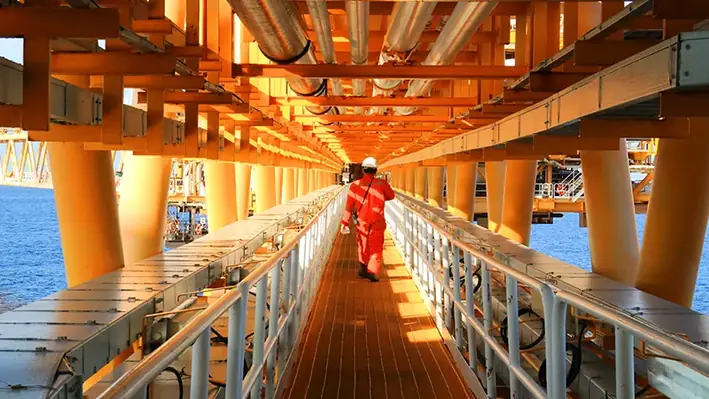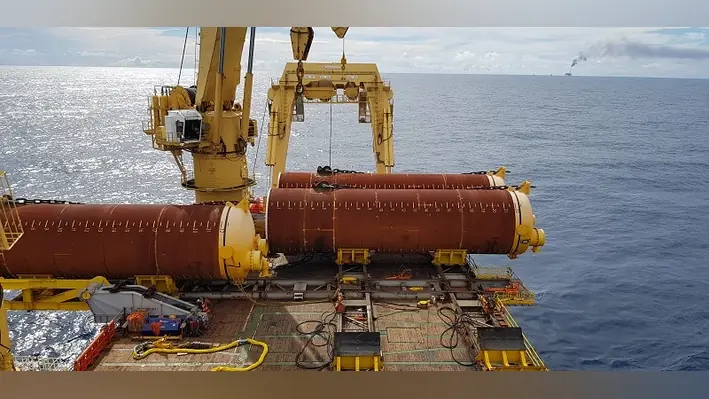
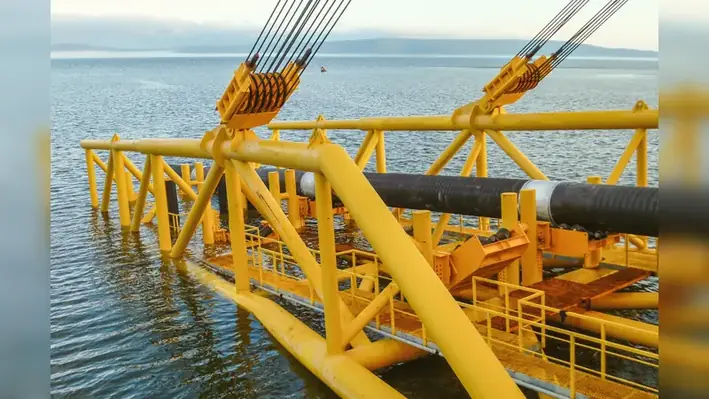
A Victorian parliamentary inquiry has heard warnings that ageing subsea pipelines in Bass Strait could leach hazardous contaminants into the marine environment, while also presenting a major opportunity for domestic steel recycling.
Witnesses appearing before the Legislative Council Environment and Planning Committee’s inquiry into decommissioning oil and gas infrastructure highlighted serious concerns over the legacy pollution from offshore facilities in Victoria’s Gippsland region.
Fern Cadman, Fossil Fuel Industry Campaigner at the Wilderness Society, told the committee that around 800 km of subsea pipelines in the Gippsland offshore area contain naturally occurring radioactive materials, mercury, hydrocarbons, and heavy metals.
These substances pose risks to human health and the environment.
“Even if buried, eventually they will degrade, and all that is going to end up in the environment,” Cadman said.
Stan Woodhouse from Friends of the Earth echoed these fears, noting that contaminants can bioaccumulate and transfer through the food chain.
“If we leave it on the seabed, it will end up on our dinner plates,” he said.
The groups urged full removal of the pipelines before corrosion advances, rejecting industry claims that removal is too difficult.
Cadman countered, “Industry says it’s too hard to remove them, but engineers say almost anything can be done, you just have to be prepared to pay for it and use the right tools.”
The committee is examining the scale, legal ownership, and structure of Victoria’s oil and gas infrastructure, including offshore wells, pipelines, high-pressure transmission systems, low-pressure distribution networks, and projects in Commonwealth waters.
In contrast, Jerusha Beresford, Sustainability Adviser at the Australian Steel Institute (ASI), presented decommissioning as a strategic resource for Australia’s circular economy.
The first phase of Bass Strait platform retirements is expected to yield 60,000 tonnes of high-grade steel from 12 platforms, with much more anticipated over the coming decade.
Beresford called for prioritising local recycling into domestic steel manufacturing rather than export.
“We are strongly recommending that the scrap steel recovered from the decommissioning of the Bass Strait oil and gas infrastructure is recognised as a valuable national resource,” he told the committee.
Demand for steel in renewable infrastructure is projected at about 400,000 tonnes annually through to 2030, making retained scrap essential.
Recycling scrap dramatically cuts carbon intensity compared with primary production from iron ore and coal, supporting low-emission steelmaking via electric arc furnaces (up to 90% recycled content) or enhanced blast furnace processes.
Economic benefits are substantial: every 10,000 tonnes processed locally generates 37 jobs and AUD$4.8mn in value-add, versus just AUD$1.3mn if exported.
Without regulation, contractors may export scrap for short-term profit, as past patterns suggest.
Beresford described the moment as a “once-in-a-generation” chance to bolster manufacturing, create employment, and advance sustainability in an industry employing 100,000 people and generating AUD$30bn yearly.
The committee’s report is due by June 2026.