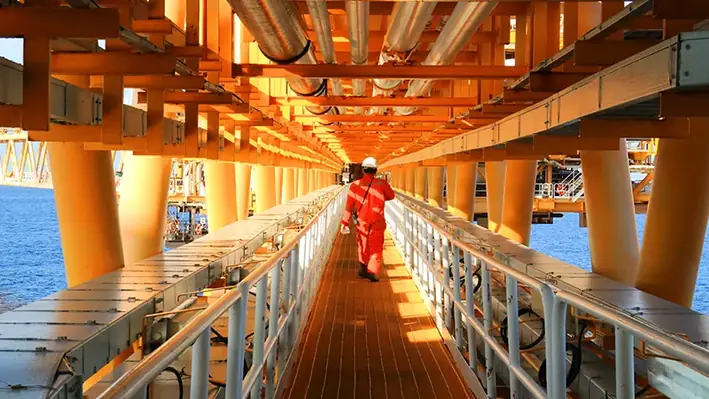

Australia's offshore oil and gas sector is entering a critical phase of decommissioning, as ageing infrastructure in regions like the Bass Strait and Western Australia reaches the end of its productive life.
With maturing fields driving activity, the industry faces substantial challenges in safely removing platforms, pipelines, and wells while minimising environmental impact and ensuring financial accountability.
Recent analysis by global energy consultancy Xodus, commissioned by the Australian Government, estimates the total decommissioning liability in Commonwealth waters at AUD43.6bn through 2070, or AUD66.8bn when adjusted for inflation.
This figure represents a significant reduction from the 2020 estimate of AUD61.8bn, attributed to improved efficiencies and better understanding of decommissioning processes.
The scope encompasses over 700 wells, 7,600 km of pipelines, and 520 subsea structures, with approximately 55% of the work anticipated before 2040.
Separately, the Centre of Decommissioning Australia (CODA) projects US$40bn in offshore activity over the next 50 years, emphasising well plugging and pipeline removal as primary costs.
Key projects illustrate progress. ExxonMobil Australia's Bass Strait programme, the nation's largest decommissioning effort, advanced significantly in 2025.
The team permanently sealed more than 200 wells and processed over 10,000 tonnes of steel and concrete for recycling or disposal.
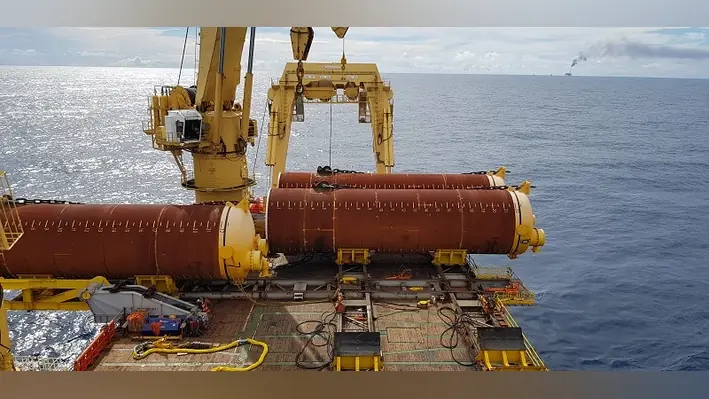
Retired platforms have entered "stasis mode," secured and prepared for removal, with the Allseas Pioneering Spirit vessel scheduled to commence lifting operations in 2027.
Woodside Energy has also made strides in Western Australia.
Offshore decommissioning at the Enfield field, which began in 2022, is nearing completion.
While physical removal works are complete, post-decommissioning environmental obligations are still ongoing. According to Woodside, an annual report is scheduled for December 2026.
The Nganhurra Riser Turret Mooring was recovered in November 2023, and deconstruction achieved over 95% reuse or recycling by March 2024.
Ongoing work at the Griffin and Stybarrow fields includes the Griffin Riser Turret Mooring recovery in December 2024.
Government reforms are also bolstering the framework.
In November 2025, the Department of Industry, Science and Resources (DISR) released a consultation paper on enhancing decommissioning planning, financial assurance, and compliance tools.
Additionally, the Offshore Petroleum and Greenhouse Gas Storage (Resource Management and Administration) Regulations 2025 have been remade, effective from 31 March 2026, to improve resource management.
As Australia transitions towards net-zero goals, these efforts underscore a commitment to responsible decommissioning, balancing economic realities with environmental stewardship. Industry collaboration, as highlighted in reflections on 2025's landscape, will be pivotal in navigating the ramp-up to 2027 and beyond.