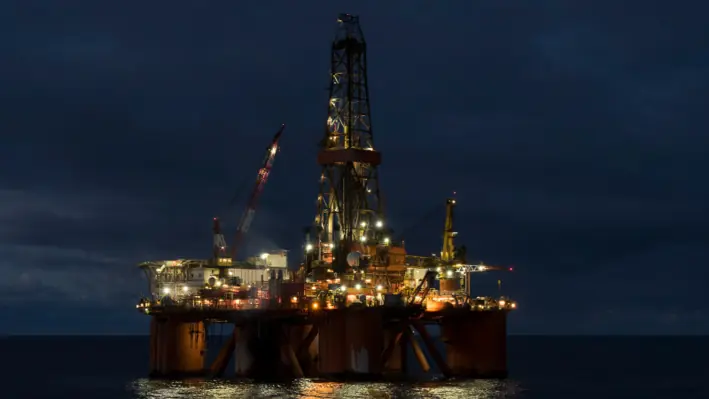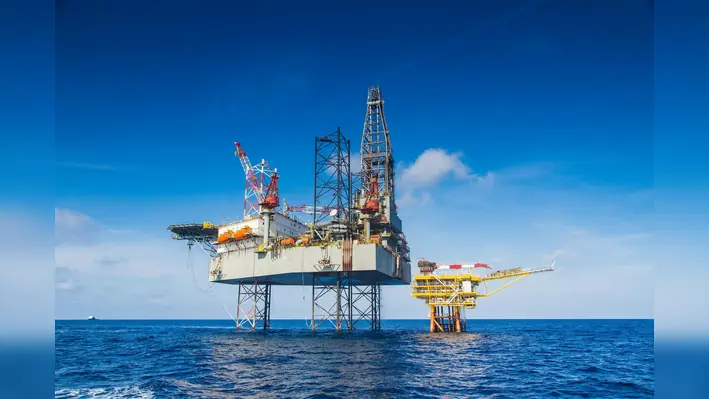
 Offshore energy infrastructure across Australian waters is hurtling towards an unprecedented environmental and financial reckoning, yet regulatory safety nets appear ill-equipped to handle the fallout.
In a landmark ruling, the Federal Court has determined that fossil fuel giant Santos is not legally required to prove its financial capacity to clean up its ageing Reindeer gas infrastructure off Western Australia's Pilbara coast. The outcome of the legal challenge, brought against the National Offshore Petroleum Safety and Environmental Management Authority (NOPSEMA) and Santos by the Wilderness Society, has sparked fierce condemnation from conservationists and exposed severe regulatory gaps in national decommissioning frameworks.
Broken regulations and corporate liability
The Conservation Council of WA (CCWA) has labelled the court's decision a failure of process that leaves coastal ecosystems and public finances in acute jeopardy. Assessing the ruling, CCWA Executive Director Matt Roberts described the outcome as "of grave concern".
"This decision clearly shows that when it comes to regulating oil and gas corporations, Australia's laws are broken," Mr Roberts said. "In a judgement released on Friday, the Federal Court found that NOPSEMA was not legally required to be satisfied Santos had the financial capacity to clean up its ageing Reindeer gas field off the Pilbara coast."
Without statutory requirements demanding upfront financial guarantees before production concludes, operators can sidestep the monumental expenses of marine remediation.
“Our laws fail when they don't require multinational oil and gas corporations to take responsibility for cleaning up after themselves in our oceans. We've seen the failures of Australia's oil and gas decommissioning laws play out multiple times now," Mr Roberts stated.
A legacy of stranded maritime assets
The Reindeer verdict is not an isolated breakdown; it reflects a persistent pattern of abandoned liabilities across Australian waters, where corporate insolvency has repeatedly threatened public funds.
“Just last month, two companies, Pilot Energy and Triangle Energy both ceased trading, leaving a stranded asset sitting off the coast of Dongara in WA's Mid West, leaving a $200 million clean-up bill," Mr Roberts noted.
Highlighting earlier precedents, he added: “We've been here before, when Woodside offloaded its Northern Endeavour decommissioning liabilities to a company that went broke. After that debacle, the federal government said it would reform Australia's decommissioning laws, yet here we are, still waiting."
“By delaying these reforms any further, the government runs the risk of more unfunded liabilities and more stranded assets," he warned.
The scope of decommissioning by 2030
The volume of obsolete fossil fuel assets in Australian waters presents a critical logistical and ecological challenge as offshore infrastructure reaches operational retirement.
Mr Roberts pointed to official projections detailing the sheer magnitude of the work ahead:
-
"We have billions of dollars of oil and gas decommissioning work which will need to begin by 2030, according to the Department of Industry, Science and Resources."
-
“More than 5.7 million tonnes of material will need to be removed from our oceans nationally, with 89% of that infrastructure located in WA waters."
Urgent calls for legislative reform
To prevent the financial burden from shifting onto the public, environmental organisations are demanding comprehensive statutory overhauls and dedicated funding pools.
“We're calling on oil and gas companies to report on their liabilities project-by-project, to increase accountability and improve accuracy on cost estimates for decommissioning," Mr Roberts urged. "Oil and gas companies must be legally required to set aside dedicated, upfront clean-up funds now - not after they've already left, collapsed, or offloaded the liability onto a smaller player."
Leaving these obligations unaddressed carries severe ecological dangers. As Mr Roberts stressed, “Australian taxpayers and the marine life we all cherish are left vulnerable when corporations are allowed to leave toxic oil and gas assets to rot in our oceans."
"This disappointing legal outcome is yet another example of this process failing our communities, nature and the environment," he concluded. “This level of decommissioning work is a massive liability, and it's up to the government to make sure gas companies, not taxpayers, are the ones paying for the clean-up and the loopholes are closed to prevent the offloading of liabilities or delays.”