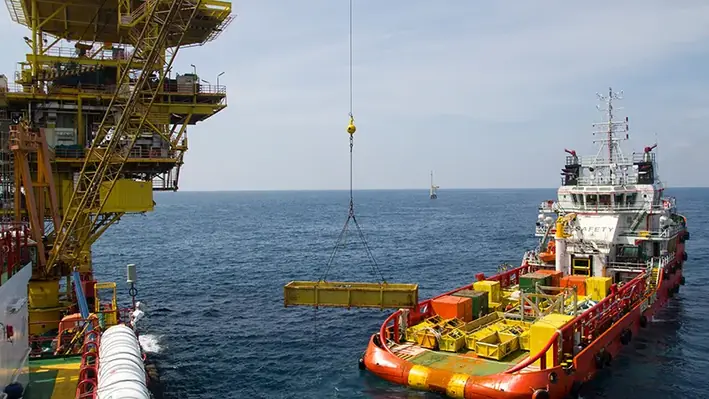
 As Australia's offshore decommissioning industry grows, lifting operations are becoming more frequent, more complex and potentially more hazardous.
That is one of the core messages from an article in the latest issue of The Regulator, the journal of the National Offshore Petroleum Safety and Environmental Management Authority (Nopsema).
Removing ageing platforms, subsea equipment and heavy structures presents risks that go beyond routine operations, making careful planning, maintenance and decision-making more important than ever.
“Analysis from Nopsema and international regulators shows that lifting incidents have increased over the past decade, even as safety systems have improved,” the article notes.
“This trend reflects changes in the offshore environment. Even though the number of cranes used offshore has not increased over the past 10 years, operations are becoming more complex, with heavier lifts, more simultaneous activities and increased use of large-scale equipment. Offshore decommissioning and the growth of offshore wind have also contributed to a rise in lifting activity.”
The articles cites the example of a 40-tonne subsea module dropping to the seabed after a degraded crane wire failed, demonstrating the consequences of deferred maintenance — an issue that becomes more significant as operators dismantle ageing offshore infrastructure.
“Ageing infrastructure is another factor,” the article notes. “As assets mature, maintaining structural integrity and equipment performance becomes more challenging, particularly where inspection and maintenance tasks are deferred.”
As well as ageing assets, with equipment and structures that may have deteriorated over decades, several other key points are particularly relevant to decommissioning in terms of offshore lifting.
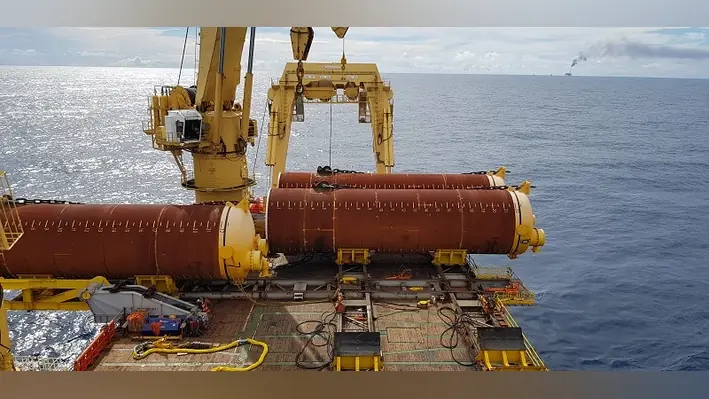
These include the tendency toward heavier and more unusual lifts — decommissioning often involves removing large modules, pipelines and subsea infrastructure that were never designed to be lifted again.
Changing conditions are also significant factors, as corrosion, marine growth and structural degradation can make lifts more complex than engineering drawings might suggest.
Commercial pressures, with projects often operating to tight schedules and budgets, creates a further challenge.
But the biggest threat in offshore lifting is often a combination of human behaviour, the Nopsema article notes, alongside production pressure and failures to follow safety controls, which can quickly turn routine lifts into serious incidents.
As offshore decommissioning accelerates in Australia over the coming decades, lifting safety will be a defining challenge.
Success may hinge not only on engineering and technology, but on robust planning, maintaining lifting equipment, and fostering a culture where workers not only adhere to strict safety protocols, but are empowered to stop operations when something does not look right.