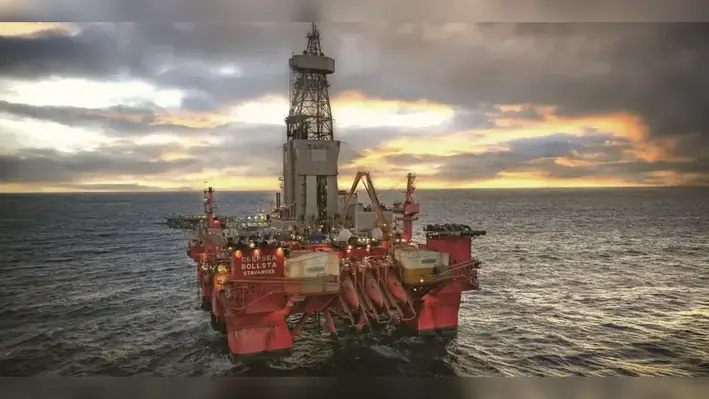
Equinor has completed its investigation into a well control incident on the Deepsea Bollsta drilling rig that resulted in a gas release during operations in September 2025.
The company confirmed that the incident, which occurred on 23 September while plugging a well at the Troll Field, has been classified in its most serious internal category of severity.
According to the investigation report, the event happened while crews were cutting a 13-3/8-inch casing at a depth of around 510 metres. During the operation, gas and fluid escaped from the well and spread across the drill floor and into the shaker room, an area where rock fragments and drill cuttings are separated from drilling fluids before the fluid is circulated back into the well.
One worker experienced difficulty leaving the room because of pressure differences caused by the release. The individual managed to exit using force but suffered minor injuries and received first aid on board the rig. The escaping gas and fluid also caused damage to the ventilation system in the room’s ceiling.
Despite the seriousness of the event, company officials said multiple safety barriers operated as intended. Automatic gas detection systems activated emergency protocols, which included shutting down potential ignition sources across the rig.
Crew members then activated the rig’s blowout preventer and diverter system in line with emergency procedures. The diverter redirected gas, fluids and pressure away from the installation before the blowout preventer fully closed.
The system sealed the well after approximately 71 seconds, stopping the flow of gas. Operators reported that the situation was brought under control within about half an hour.
Calculations carried out during the investigation estimate that roughly 930 kilograms of gas were released over a short period. The volume triggered a “Red 1” classification within the company’s internal risk management framework, indicating the highest level of severity.
The investigation found that the blowout preventer remained open at the moment the casing was cut, while gas had accumulated behind the casing in a confined space. Equipment used to log the annulus area behind the casing had not been correctly calibrated, meaning the trapped gas was not detected before the operation began.
Officials stressed that the gas was contained in a limited volume behind the casing and was not connected to the reservoir, meaning the incident did not present a risk of an uncontrolled blowout.
Following the event, the company introduced new procedures requiring the blowout preventer to be closed when cutting shallow casings or pulling casing strings, regardless of activation timing.
Rune Nedregaard, senior vice president for drilling and well operations, said the findings would be shared with industry partners and suppliers, while the investigation by the Norwegian Ocean Industry Authority would also inform further safety improvements.