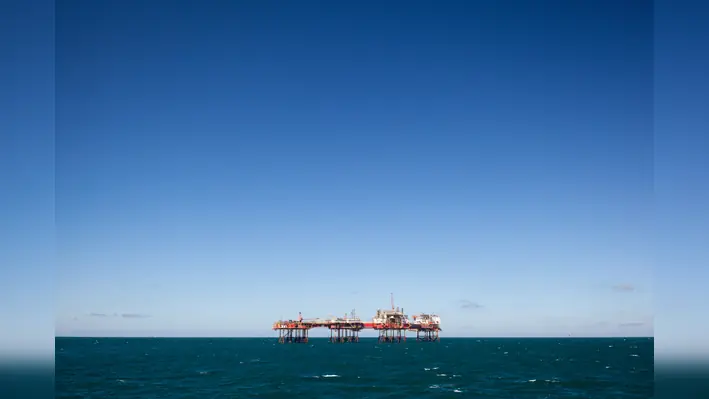
 Australia’s offshore regulator, Nopsema, has issued new guidance that clarifies requirements for offshore decommissioning in Commonwealth waters.
The guidelines seek to clarify regulatory requirements for the removal of offshore oil and gas assets and the sea dumping of infrastructure in Commonwealth waters as part of decommissioning.
These waters are ocean zones that typically begin 3 nautical miles (approximately 5.5 kilometres) off the Australian coast and extend outward to the edge of Australia's Exclusive Economic Zone (EEZ) at 200 nautical miles.
“Decommissioning is a normal and expected part of the lifecycle of every offshore oil and gas project,” a 15 May, 2026 Nosema statement read.
“Under Australian law, the full removal of offshore property and infrastructure is the default requirement once operations have ended. The new guidance provides clarity on how existing legislative frameworks apply to decommissioning activities, and how proposals are assessed where alternatives to full removal are put forward.”
The guidance explains how the Offshore Petroleum and Greenhouse Gas Storage Act 2006 and the Environment Protection (Sea Dumping) Act 1981 intersect when considering decommissioning outcomes.It outlines the categories of property and infrastructure that cannot be left in the marine environment, as well as those that may, in limited circumstances, be assessed by regulators to determine whether they are suitable to remain in the sea.
“The guidance aims to clarify application and assessment considerations for oil and gas titleholders or operators if proposing an alternative to full removal requirements to leave property or infrastructure in the sea,” the Nopsema statement added.
Importantly, it does not guarantee that any property or infrastructure will be approved to be left in place.
“Decisions are made on a case-by-case basis and must demonstrate that environmental and safety risks and impacts are acceptable under the relevant legislation. The guidance also supports early and proactive planning for decommissioning by setting out key application and assessment considerations for offshore titleholders and operators.”
The new guidelines were developed jointly by the Department of Industry, Science and Resources, the Department of Climate Change, Energy, the Environment and Water, alongside Nopsema, following public consultation in 2024.
It does not introduce new policy or regulatory requirements, but clarifies how existing requirements are applied in practice.The full guidance document is available via the Department of Industry, Science and Resources website.