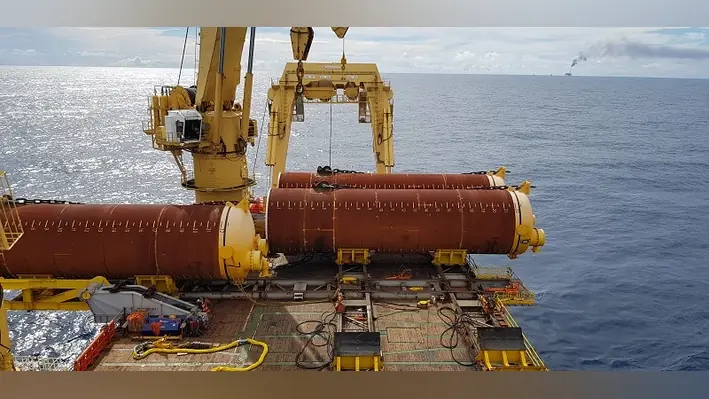
 Australia faces a major offshore oil and gas decommissioning challenge, with costs estimated at US$40.5bn over the next 50 years, covering more than 1,000 wells as well as related infrastructure.
This is estimated by the Centre of Decommissioning Australia (CODA) to involve the dismantling and disposal of topsides and substructures equivalent to 75 Eiffel towers.
Recent guidance issued by the UK’s Net Zero Technology Centre, in partnership with engineering consultancy Astrima, could help energy companies globally speed up the rollout of improved technologies for decommissioning oil and gas wells, thereby helping to cut costs as well as reducing the environmental impact of ageing energy assets.
The Aberdeen-based centre said the current pace of deployment “remains incredibly slow” as the scale of the challenge grows.
The first guidance is focused specifically on well plug and abandonment (P&A), given that well abandonment is one of the most costly aspects of decommissioning.
It sets out a clear, evidence-based process to assess whether materials can safely and permanently seal wells that are no longer in use. The six-step framework supports safe and confident use through a structured qualification process, helping users identify risks, build a strong evidence base, and streamline approvals to accelerate the safe deployment of new solutions.
Long-term safety and environmental protection are critical as the industry moves away from traditional cement-based barriers. New technologies using low melting point alloys, resins, polymers and epoxies are emerging, but face challenges demonstrating their effectiveness and reliability.
The framework incorporates input from operators, regulators and technology developers, and draws on international guidelines and standards such as DNV RP A203 and API RP 17Q, which are widely used across the energy sector.
Lewis Harper, Programme Manager at NZTC, said,“Well decommissioning is an increasingly urgent global issue as maturing basins seek ways to cut costs, reduce emissions and improve efficiency. The only way to achieve that is through new technology, but the pace of developing and deploying new solutions remains incredibly slow.
“This guidance will help speed up the safe adoption of innovative technologies, giving operators and regulators the confidence to move faster. By managing performance to stringent standards, the adoption of new materials should become easier and more reliable. This framework gives the industry the tools to tackle well decommissioning challenges with greater confidence.”