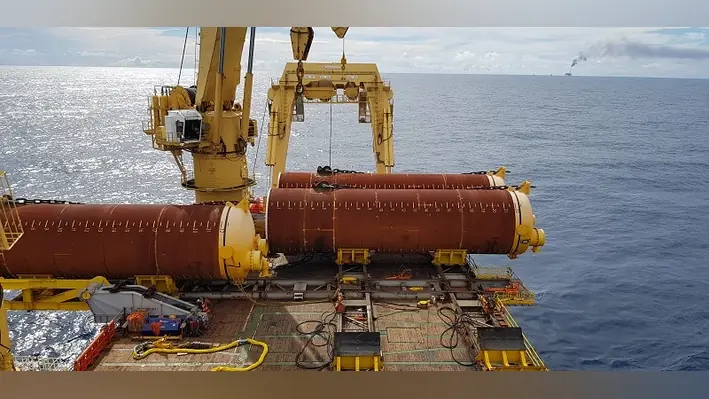
 The offshore oil and gas sector in Australia operates within one of the most demanding physical environments in the world.
As facilities mature and production demands shift, the necessity for robust asset integrity management has never been more critical. Overseeing this high-stakes domain is the National Offshore Petroleum Safety and Environmental Management Authority (NOPSEMA), Australia's independent expert regulator. Tasked with ensuring health, safety, environmental management, and structural and well integrity in Commonwealth waters, NOPSEMA drives the regulatory landscape that governs the lifecycle of every offshore facility.
At the core of Australia’s offshore regulatory framework is the Offshore Petroleum and Greenhouse Gas Storage Act 2006 (OPGGS Act), alongside a comprehensive suite of associated regulations. This legislative foundation dictates that no offshore petroleum activity can commence until NOPSEMA has strictly assessed and accepted a detailed risk management plan. The fundamental standard for these plans is the demonstration that an organisation will manage risks to structural and well integrity to a level that is "as low as reasonably practicable" (ALARP).
Recent Legislative Updates and Risk Management
Recently, the regulatory regime has seen significant updates, including the implementation of the Offshore Petroleum and Greenhouse Gas Storage (Safety) Regulations 2024. These legislative revisions reflect a modernised, highly risk-based approach to oversight, ensuring that regulatory resources are precisely targeted toward the industry's most pressing vulnerabilities. NOPSEMA expects duty holders to continuously evaluate their control of work systems, from detailed job task analyses to robust permit-to-work processes. By aligning these operational protocols with evolving international best practices, operators can eliminate or drastically reduce the inherent risks associated with complex offshore activities.
NOPSEMA’s National Priorities
To provide clear strategic direction, NOPSEMA has identified key areas requiring sustained regulatory attention through its Five National Priorities. Foremost among these is structural integrity, ensuring offshore assets remain inherently safe, efficient, and fully compliant throughout their operational lives. A continuous lifecycle approach is essential, particularly as operators must proactively combat the severe risks associated with long-term marine operations, such as relentless corrosion, fatigue, and environmental stress.
Another critical priority is the responsible management and permanent decommissioning of redundant offshore wells. Timely and effective well plugging and abandonment are treated as essential for long-term risk management and environmental protection, effectively minimising the potential for any disastrous loss of well control. The remaining national priorities focus heavily on protecting worker psychosocial health, improving the overall control of work to prevent recurring incidents, and emphasising how executive leadership decision-making directly impacts offshore safety outcomes.
Managing Ageing Offshore Infrastructure
A central challenge currently shaping the regulatory landscape is the complex management of mature offshore infrastructure. NOPSEMA has provided dedicated guidance on ageing assets and life extension, urging duty holders to rigorously review their existing management systems. Crucially, the regulator clarifies that asset degradation is a condition-based, rather than strictly time-based, phenomenon. As NOPSEMA’s official guidance notes: "Ageing is not about how old your equipment is; it is about its condition, and how that is changing over time."
This vital distinction means that operators cannot rely solely on predetermined chronological milestones to dictate their maintenance schedules. Instead, they must deploy advanced monitoring techniques to continuously assess for material deterioration, damage, and any increasing likelihood of failure. It is imperative that offshore operators implement robust inspection, maintenance, and repair programmes tailored to the actual physical condition of the plant. If an asset's condition unexpectedly deteriorates, operators are legally required to instigate comprehensive recovery plans to promptly restore integrity and bring the associated risks back down to the ALARP threshold.
Successfully navigating the evolving regulatory landscape for asset integrity management in Australia’s offshore oil and gas sector demands far more than basic compliance. It requires a proactive, strategic commitment to continuous operational improvement. By integrating structural integrity, responsible decommissioning, and dynamic asset management into their core strategies, operators can ensure they meet NOPSEMA’s rigorous standards while safeguarding their workforce and the marine environment.