Early design decisions and robust qualification of subsea connectors can fundamentally impact the long-term integrity of subsea pipelines, warns Lloyd’s Register (LR), in a new study for the Norwegian Ocean Industry Authority (Havtil).
The report “Integrity of Connectors in Pipelines and Subsea Systems” provides an updated basis of experience for assessing the integrity of welded and mechanical connectors in pipelines and subsea facilities, highlighting how the right choices early in the design phase are crucial for safe and responsible operations throughout the entire service life.
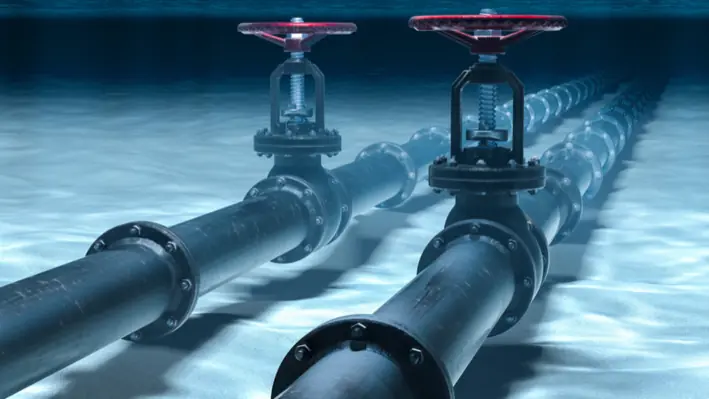
Pipelines and subsea facilities are critical components of offshore energy production, connecting fields to processing and export infrastructure while operating in some of the world's most demanding environments. Ensuring their structural integrity throughout decades of service remains a key challenge for operators and regulators alike. The integrity of connectors in pipelines and subsea systems is critical for the safe and continuous operation of offshore infrastructure. Common failure modes for subsea connectors include leakage, material failure, mechanical failure, and corrosion, with leakage identified as the most frequent failure mode.
Drawing on industry data, LR maps common fault mechanisms and performance trends, concluding that decisions taken at the design stage have a direct impact on failure risk throughout an asset’s life. Operators need to ensure that connector design and qualification processes are sufficiently robust for such critical components.
Comprehensive qualification provides confidence in the integrity of the connector throughout service life, while early involvement of the original equipment manufacturer can support life extension by validating key design assumptions and performance limits.
Recommendations
The report makes the following recommendations to enhance the integrity and reliability of subsea connectors:
• Collaboration with manufacturers: Engage with connector manufacturers to leverage their expertise in identifying potential failure modes and developing mitigation strategies. Manufacturers can provide valuable insights into the design, qualification, and maintenance of connectors.
• Regular inspections: Establish a robust inspection regime, in collaboration with manufacturers, that includes regular visual inspections, cathodic protection surveys, and postinstallation testing to detect and address potential issues early.
• Life extension assessments: Conduct life extension assessments for connectors approaching the end of their design life. This should include evaluating the condition of the connector, the loads it has been subjected to, and its compatibility with the transported fluids. Particular attention should be made towards components which are a single point of failure for the connector.
Sean Murray, Global Technical Authority – Pipelines and Subsea at Lloyd's Register, said, “Subsea systems are expected to perform safely and reliably for many years in challenging operating conditions. The choices made during design have a lasting impact on their integrity and long-term performance.
“This project consolidates industry experience, operational data, and failure insights to support improved risk-based decision-making across the lifecycle of subsea assets. It highlights that, while subsea connectors generally demonstrate high reliability, their performance is strongly dependent on robust design, manufacturing quality, installation control, and rigorous qualification.
“By better understanding how different connector solutions perform in service, operators can make more informed decisions that enhance safety, reduce risk and improve through-life reliability of these critical components.”
Steffen Andreasen, principal engineer at Havtil, added, “Sharing experience and knowledge across the industry is key to reducing risk and improving structural safety. This study highlights how the integrity of subsea connectors depends on robust design, qualification, and integrity management, which together are essential for maintaining safe and reliable operations throughout the lifetime of subsea infrastructure.”