 Energy technology company, Baker Hughes, has been selected by ANOH Gas Processing Company (AGPC) for comprehensive lifecycle services, including parts, repair services and engineering advisory.
The company will also be delivering iCenter digital services for turbomachinery equipment at the greenfield ANOH Gas Processing Plant in Nigeria.
The agreement secures Baker Hughes’ role as a lifecycle solutions provider for one of the nation’s critical onshore gas projects. Baker Hughes services for the ANOH Gas Processing Plant goes back to 2019, when the company supplied an integrated power island solution for the facility, inclusive of two NovaLT 16 gas turbines – the first supplied in Sub-Saharan Africa – along with compressors and gears.
The service agreement covers essential maintenance and repairs for the plant’s critical equipment, including two NovaLT 16 gas turbines. In addition to providing local engineering support, Baker Hughes will deploy iCenter digital services, powered by Cordant, for remote monitoring and diagnostics to enhance equipment reliability, availability and optimized operations.
“It is a pleasure to collaborate with a globally trusted energy technology leader like Baker Hughes on this critical project,” said James Makinde, Managing Director at ANOH Gas Processing Company. “The reliable performance of critical turbomachinery equipment is essential to the successful operation of the ANOH Plant and to delivering on Nigeria’s domestic energy supply goals.”
“This long-term agreement is a testament to our successful collaboration with ANOH Gas Processing Company and the trust placed in our lifecycle service capabilities,” said Baker Hughes Chief Growth & Experience Officer and interim Executive Vice President of Industrial & Energy Technology Maria Claudia Borras. “We are leveraging our regional expertise and pairing it with our advanced digital technologies and services, supporting the delivery of reliable, efficient and affordable power solutions and helping Nigeria realize its goal to move to lower-carbon fuel sources.”

 TechnipFMC has been appointed by Azule Energy to supply flexible flowlines and risers for the Greater PAJ development offshore Angola.
The flowline and risers network will be manufactured and designed to connect wells in water depths approaching 2,000 meters to a new floating production unit.
Jonathan Landes, President, Subsea at TechnipFMC, said, “This award builds on expertise we have developed on large, deepwater projects in the region, including our proven flexible pipe technology. We are proud to be chosen to deliver a technically robust solution on an accelerated timeframe that creates value for our client.”
Previously, TechnipFMC had generated impressive profit from Nigeria's Bonga North deepwater project, delivered for Shell Nigeria Exploration and Production Company Limited. The company supplied Subsea 2.0 production systems for the project, with work covering the design and manufacture of subsea tree systems, manifolds, jumpers, controls and other services.
Shell’s Bonga North development off Nigeria is being developed as a subsea tie-back to the Bonga floating production storage and offloading (FPSO) facility, located in block OML 118, in water depths over 1,000 metres.
It includes drilling, completing and starting up 16 wells (eight production wells and eight water injection wells), modifications to the existing FPSO and the installation of new subsea hardware tied back to the facility.
Bonga North currently has an estimated recoverable resource volume of more than 300 million barrels of oil equivalent (boe) and will reach a peak production of 110,000 barrels of oil a day, with first oil anticipated by the end of the decade.
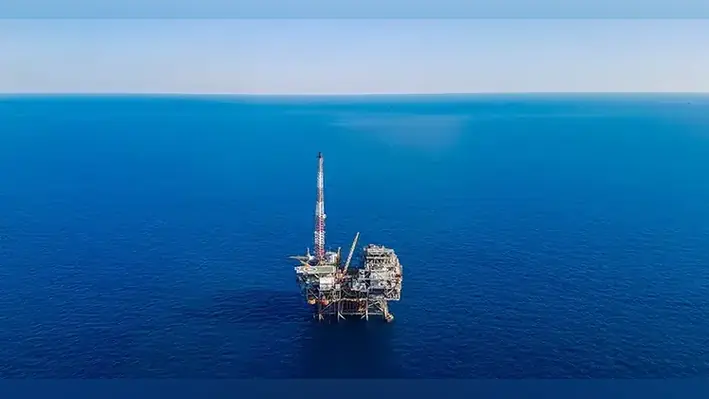
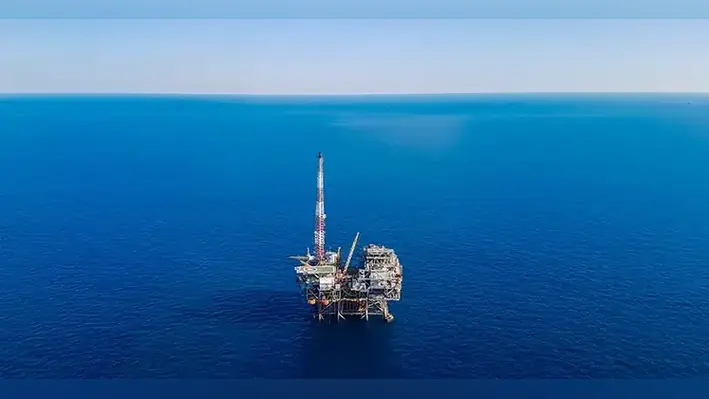 Vaalco Energy has brought back online the Baobab field on CI-40 block offshore Ivory Coast following the refurbishment of Baobab Ivoirien Floating Production Storage and Offloading vessel.
This comes following a nine-month refurbishment in Dubai, as the FPSO returned to Côte d’Ivoire in early Q2 2026, was moored into position and re-connected to the field infrastructure.
Production has resumed from four producing wells with the remaining three producers expected to come online shortly; the field is performing in line with Vaalco’s expectations.
FPSO refurbishment was undertaken to extend the life of the vessel and to ensure its long-term operational capacity as a significant development drilling program at Baobab is planned to begin in the second half of 2026; and Phase 5 drilling programme is expected to include four producers, two to three injectors and two workovers providing potential meaningful additions to production from the main Baobab field.
George Maxwell, Vaalco’s Chief Executive Officer, commented, “We are excited that the Baobab field on the CI-40 block offshore Côte d’Ivoire has restarted production in line with our projected timeline. We have the CI-40 block license extended through 2038 and believe that there is significant development drilling upside at Baobab. In early 2024, we had no assets in Côte d’Ivoire and now we have developed a strong position with development and exploration potential. We are at a critical junction, with successes in the Gabon drilling campaign and the Baobab field returning to production, and we believe that the remainder of 2026 will be very impactful. We remain focused on execution and driving meaningful growth through our organic capital programs that we believe will translate into value for our shareholders in 2026 and beyond.”
 Petralon Energy is an African exploration and production company with proven capacity to acquire, develop, finance, and operate oil and gas assets.
Operating through its subsidiary Petralon 54, the company holds a 100% working interest in the Dawes Island Field in the Eastern Niger Delta.
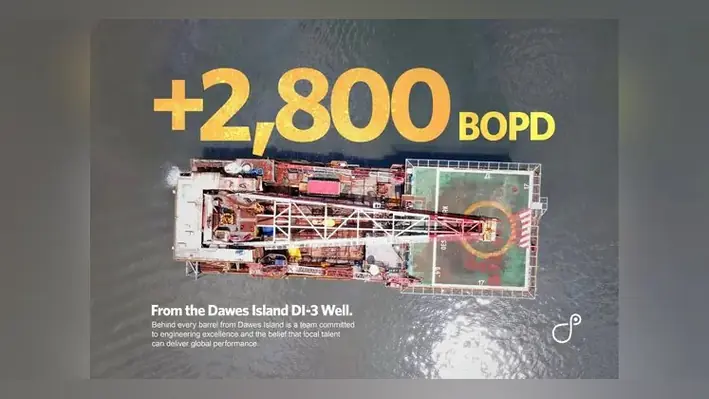
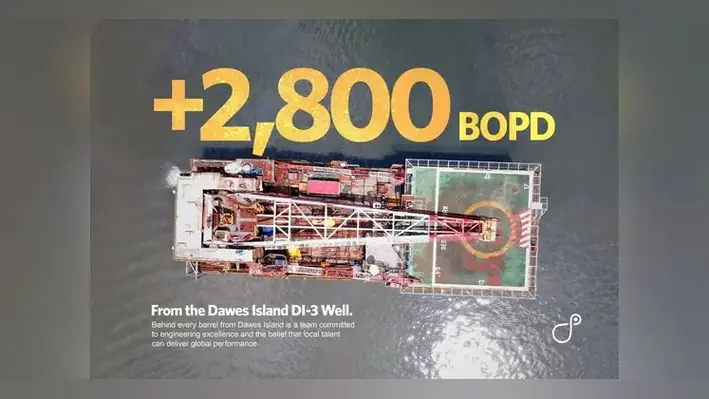
In just under six months, Petralon 54 has revamped its production capacity significantly through its recently established DI-3 well. Operations began on 14 March 2026 and has since delivered average additional daily production of approximately 2,800 barrels of oil per day (bopd), bringing the field's combined production capacity to approximately 4,800 bopd.
DI-2 has been onstream since October 2025 and DI-3 builds directly on the performance of its predecessor. Together, the two wells have sustained back-to-back drilling programme on a field that was non-producing at the time of Petralon's acquisition in 2021. Till date, the company has exported over 350,000 barrels of oil from the field via the Bonny Oil and Gas Terminal, which is located around 30km from the field. The DI-3 well became operational with zero lost-time incidents and it reflects the company's commitment to world-class health, safety, and environmental standards across its operations.
Dawes Island is located approximately 15km from Port Harcourt in the Eastern Niger Delta. The island covers roughly 46 sq km and holds an estimated 17.6 mn barrels of recoverable oil. “Our success at Dawes Island was built on the conviction that Nigerians could acquire, develop, and operate world-class energy assets. That conviction once required courage, today, it stands on proof. The easy thing after DI-2 would have been to pause, but the determination and resilience of every single member of the Petralon team drove us forward, and DI-3 is the result of that effort. Progress like this is only possible through the strong collaboration we have built with our host communities, our regulator, and our partners. This is only the beginning of what Dawes Island can deliver," said Ahonsi Unuigbe, founder and chief executive officer of Petralon Energy.
Through the commencement of DI-3 production, Petralon Energy validates another major step in the phased development of Dawes Island. The company stays focused on growing production, strengthening its position as a leading indigenous operator in Nigeria's upstream sector, and advancing its longer-term ambition for the field.

 Weatherford International has received a deepwater integrated completions contract by ExxonMobil affiliate Esso Exploration & Production Nigeria Ltd offshore Nigeria.
Selected for its well construction and completions portfolio, the contract secures Weatherford's integrated upper and lower completions services for deepwater wells. It also comes with a scope for supporting safety, reliability, well integrity, and operational efficiency over the lifecycle of the well.
The integrated completions equipment will be configured and prepared through Weatherford’s global supply chain and supported locally in Nigeria, in line with contract terms, to enable in-country execution and service delivery.
Girish Saligram, Weatherford’s president and chief executive officer, said, "This contract reflects our ability to deliver integrated completions solutions for deepwater operations. We will provide technologies designed to support well integrity, reliability, and efficient execution in complex offshore environments.”
Nigerian deepwater development sees consistent advancement, with Eni being one of the several oil majors investing in the region. The company's chief executive officer, Claudio Descalzi, recently met Nigeria's President, Bola Ahmed Tinubu, to discuss Eni’s significant investment portfolio — including the Abo and Bonga fields and Nigeria LNG — as well as on potential new developments designed to expand the country’s offshore production capacity. Within this framework, and in line with its long-term strategy in the country, Eni has recently expanded its interests in deep-water developments, with the acquisition of an additional stake in OML 118, now holding 15%.
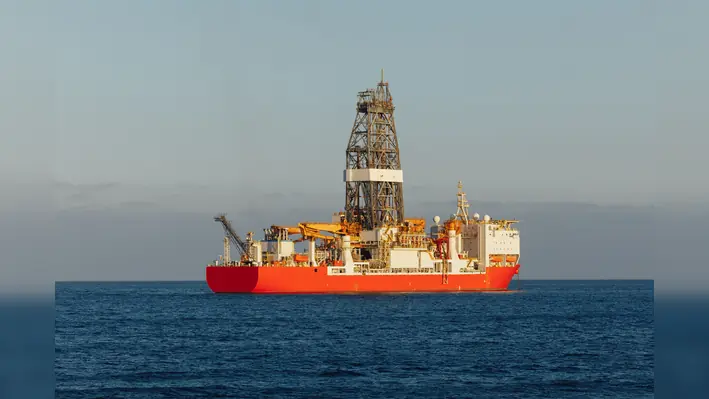
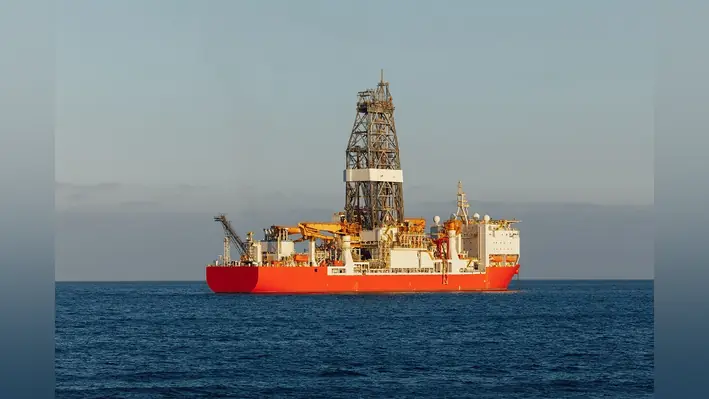 Perenco Congo has completed drilling campaign on the Tchibouela East field offshore Republic of Congo.
The results of the five infill well campaign, which concluded at the end of 2025, now show a sustained material uplift in production, providing an additional 6,000 barrels of oil per day (bopd).
The drilling campaign entailed advanced offshore drilling techniques, including horizontal and u-shaped wells, which resulted in higher oil recovery, while reducing operational risks.
Following the positive results from the Tchibouela East campaign, Perenco Congo has now started a new five well drilling campaign on the Masseko field, designed to increase producIon from the field as well as testing a new geological horizon.
“We have seen a sustained uplift in production following the recent five well infill campaign on the Tchibouela East field. This positive result clearly demonstrates our ability to extend field life and maximise the value of acreage for the benefit of all stakeholders. Tchibouela East has been in production for almost thirty years and we are pleased to help ensure that the field can produce for many more years to come. The operational tempo continues and we are now drilling on the Masseko field, where initial results from first production are encouraging,” said Gregoire de Courcelles, managing director of Perenco Congo.

 The Block G acquisition offshore Equatorial Guinea leads Panoro Energy ASA’s dynamic operational and financial updates ahead of Q1 2026 results.
With the acquisition of an additional 40.375% in the Block that raises its total interests to 54.625%, the company is anticipating to attain group net production of 20,000 bopd during the course of 2027. This will enhance joint-venture role influencing future production growth, work programme and efficiency, while Panoro sees an increase in both frequency and size of crude oil liftings.
Meanwhile, Block G continues to see multiple productive and asset integrity projects for field life extension, and the partners are evaluating the potential for future infill drilling campaigns in the Okume Complex, using a conventional jack-up rig in shallow water, and subsea infill wells at the Ceiba field.
Julien Balkany, executive chairman of Panoro, said, “Q1 was a period of strong strategic and operational delivery for Panoro, highlighted by the announcement of a transformational, highly accretive acquisition of an additional 40.375% interest in Block G, just prior to the escalation of geopolitical events in the Middle East that has led to major disruption of regional trade flows and substantial increase in global oil prices. This opportune transaction further strengthens the scale and cash flow potential of Panoro, creating a materially larger, more resilient business in order to deliver enhanced shareholder returns. The acquisition received strong endorsement from the capital markets with the associated equity private placement and bond tap issuance both multiple times oversubscribed and closed within a matter of hours.
“Operationally, we delivered pro forma working interest production of 14,960 bopd, supported by stable performance across our core portfolio and we are on track to achieve 20,000 bopd during 2027.
“Looking ahead, our priorities remain unchanged: deliver our pipeline of high-impact organic growth opportunities, starting with the MaBoMo Phase 2 drilling campaign at our cornerstone Dussafu block offshore Gabon mid-year, maturing the Bourdon discovery towards FID and evaluating the new state-of-the-art seismic data we have recently acquired covering the Niosi, Guduma and Dussafu blocks which will allow us to confirm future drilling targets.
“In Equatorial Guinea, we have also received for the first time contingent resources recognition for Block EG-23 where we have high-graded the exciting Estrella discovery as a potential fast-track appraisal and development project that could be tied back to existing infrastructure as we position Panoro for the next phase of material production and free cash flow growth.”

 Vaalco Energy has found a new source of production in the Etame 14H development well within the Etame Marine Block offshore Gabon following drilling and placement in an attic position, promising a lateral of 325 meters of net pay in high-quality Gamba sands with unmatched porosity and permeability.
The company has reported excellent initial flow rate of approximately 4,850 gross barrels of oil per day, 2,850 bopd net to Vaalco.
Encouraged by the initial well results from the 14H well, the rig has been mobilised to the Ebouri platform for the drilling of the EEBOM-5H development well. For this well too, the team is targeting an updip/attic position by sidetracking from the previously abandoned EEBOM-5P well.
“We continue to see positive results from our Gabon drilling campaign. The Etame 14H development well encountered 325 meters of net pay in high-quality Gamba sands in an attic position within the Main Fault Block at Etame. We are very pleased with the initial well rates of around 4,850 gross BOPD, or 2,850 net BOPD and are excited to add this new production. We have mobilised the rig to the Ebouri platform where we are drilling a development well and plan to workover two other wells. Our goal is to continue to successfully add production and reserves with the remainder of our Gabon drilling campaign," said George Maxwell, Vaalco’s chief executive officer.
Offshore Ivory Coast, the Baobab field in CI-40 block has been brought back online for production to begin in Q2 2026. Output from the field will be generated via risers and umbilicals that are currently being reconnected to the Baobab Ivorien Floating Production Storage and Offloading Vessel (FPSO), which is moored on location. It is ready to support production flow after a 47-day tow for refurbishment at the Dry Dock World shipyard in Dubai. Q2 2026.
George Maxwell, Vaalco’s chief executive officer, said, “We are at a critical junction, with successes in the Gabon drilling campaign and the Baobab field returning to production, and we believe that the remainder of 2026 will be very profitable. We remain focused on execution and driving meaningful growth through our organic capital programmes that we believe will translate into value for our shareholders in 2026 and beyond,” said Maxwell.
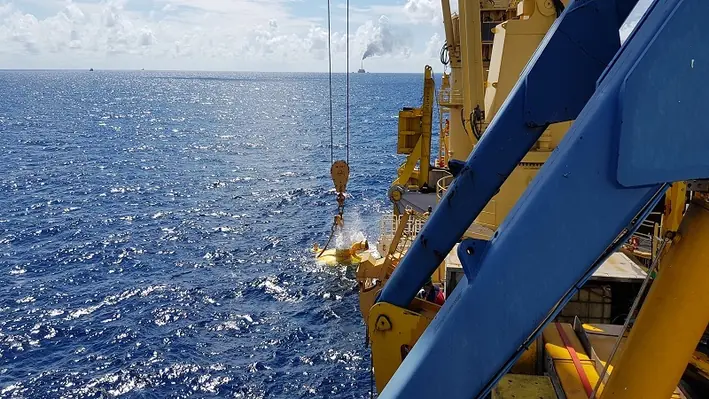
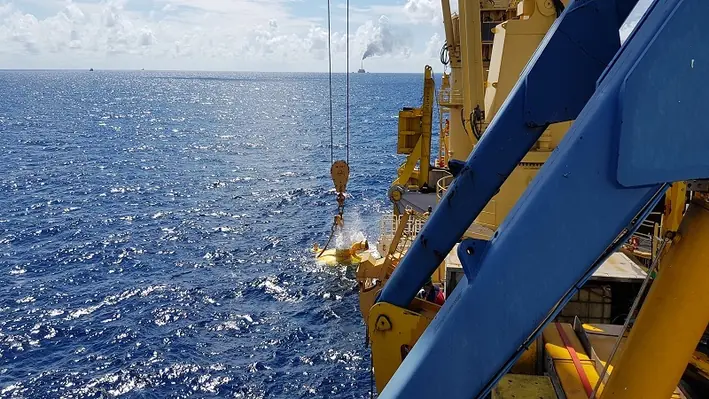 Tullow Oil has stepped into 2026 with a strong financial optimisation strategy in place, building on the previous year's results.
In 2025 itself, the company recorded commendable value from limited capital expenditure, with 8 kbopd count from one of the new Jubilee wells brought onstream, and the FPSO at Jubilee and TEN reaching 97% uptime in average. Also it has got on the books US$347mn proceeds from the sales of its Gabonese and Kenyan assets.
For a financially sound delivery of its investment programme and optimum asset value realisation, the company recently completed a comprehensive refinancing transaction, including an extension to its Senior Secured Notes and Glencore facility to November 2028 and May 2030 respectively, and a new US$100mn cargo pre-payment facility with Glencore to provide additional liquidity.
“Throughout 2025 and into early 2026, we have delivered against a clear set of strategic priorities to position Tullow for long-term success. This began with the consolidation of our business to focus on our high-value assets in Ghana, with the sale of our non-core assets in Gabon and Kenya, alongside significant cost reductions. These efforts positioned the company strongly for the successful refinancing, which completed earlier this month with overwhelming support from our creditors. This transaction provides Tullow with the strong financial foundation and flexibility required to deliver value for stakeholders," said Ian Perks, chief executive officer, Tullow Oil plc.
The company is aiming for stronger production generation than usual, encouraged by an overall 43.4 kboepd during the first quarter of 2026. Further material oil and gas reserves have opened up for the company as the Ghanaian parliament ratified long-term extensions for the Jubilee and TEN fields till 2040.
With the acquisition of the TEN FPSO, the company is securing maximum cost efficiency in unlocking future reserves and the long-term development of the TEN and Jubilee fields. This year, an additional four Jubilee wells, including three producers and one water injector, are expected onstream. As part of the current drill programme, Tullow is focussing on well designing and placement backed by data interpretation from 4D and OBN seismic survey.
"We are particularly encouraged by the positive early results from our Ghana drilling campaign...A key milestone has been the agreement to purchase the TEN FPSO, a value-accretive acquisition that significantly improves the field’s economics by eliminating lease costs and providing an opportunity to capture operating cost savings. Additionally extending the Jubilee and TEN petroleum agreements to 2040, and higher oil prices have further strengthened our platform for sustainable growth,” Perks said.
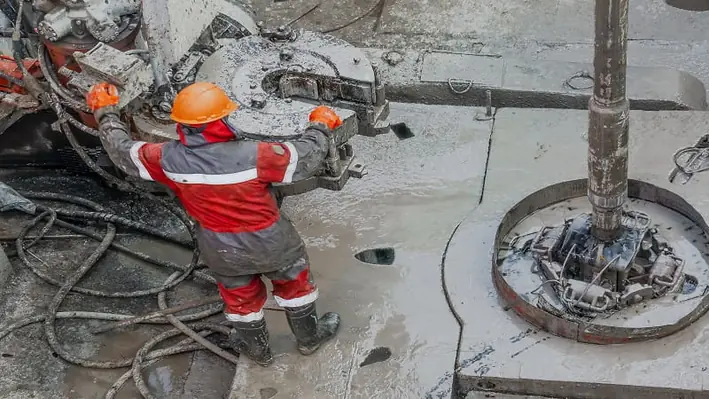
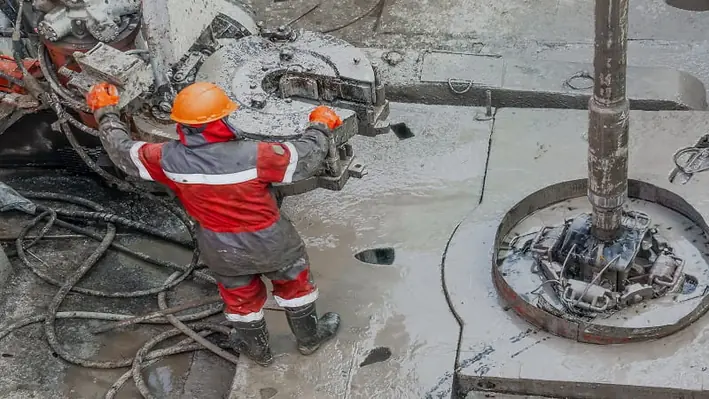 With 20,006 barrels of oil per day generated from offshore Angola during Q1 2026, Afentra plc reported a stable asset performance, driven by the consistency of asset revamping and integrity workstreams.
Key workstreams as part of multi-year redevelopment plan in Angola for increased reserves recovery and production growth included water injection work, which reached up to 70,000 bwpd. The company now targets attaining 100,000 bwpd in H2 2026.
The Pambi platform has already undergone infrastructure upgrades for improved reliability and operational performance, and similar work is ongoing on the Cobo and Palanca platforms. The Palanca FSO is ready for safe operations over the next five years as it has received formal recertification.
As part of the company's 2026 light well interventions (LWI) programme that aims to complete 40 interventions work, six has been completed on the first quarter of the year.
Alongside the drilling of the Pacassa SW well as part of 2026 infill drilling and workover programme in Block 3/05, the company will also be tackling the Impala-2 development well. It aims from this well a potential gross production uplift of ~9,000 bopd and gross recoverable resources of over 100mmbo.
Hydraulic workover programme preparations are ongoing with execution planned for late 2026/27.
In Block 3/24, operational activities continued for the GPQ development, including the planning of a survey vessel programme to execute wellhead inspection, survey and measurement scope.

Reconnaissance Energy Africa Ltd. has released its operational update and 2025 financial and operational results, alongside the renewal of its shelf prospectus.
Brian Reinsborough, President and CEO, said, "2025 was another transformational year for ReconAfrica as we progressed all aspects of our strategic goals. We completed our farm down transaction with BW Energy Ltd. which was a significant milestone for the Company. We made the strategic move to broaden our portfolio by entering the shallow waters of Gabon by signing the Ngulu PSC, which adds another discovery to our inventory and high potential exploration acreage. We entered Angola by signing the MOU to ensure we captured significant running room in the Damara Fold Belt in advance of drilling the Kavango discovery. And finally, we made a significant play opening discovery at the Kavango West 1X well. I congratulate the ReconAfrica team, and our partners, for making this an exceptional year of advancement for the Company."
Namibia
In Namibia, activities at the Kavango West 1X discovery well are progressing as planned, with optimised zone production testing expected to begin in early to mid-May. A five-inch production liner has been installed in the wellbore, enabling isolation and sequential testing of zones. Perforation and testing will cover six hydrocarbon-bearing intervals ranging from 45–75 metres in thickness across the Elandshoek and Huttenburg formations, assessing around 420 metres of hydrocarbon-saturated section. Testing will proceed from the deepest to the shallowest zone, with each phase potentially lasting up to 10 days, extending the programme to the end of June.
The company is also advancing preparations for a follow-up appraisal well located approximately 3 – 4 km southeast of the KW1X discovery. A successful appraisal well would support reserve booking and help progress toward a final investment decision (FID).
Gabon
The company has received all raw seismic data to begin a 3D reprocessing programme over the Loba oil discovery, along with an additional 400 sq km covering high-priority prospect areas. Final seismic reinterpretation is expected in Q4 2026 and will incorporate advanced Pre-Stack Depth Migration and Full Waveform Inversion technology to better image salt-related exploration plays across the concession. The dataset will support a resource report and appraisal well location selection for the Loba oil field.
Further details on the 2025 highlights and subsequent period are available on the ReconAfrica website
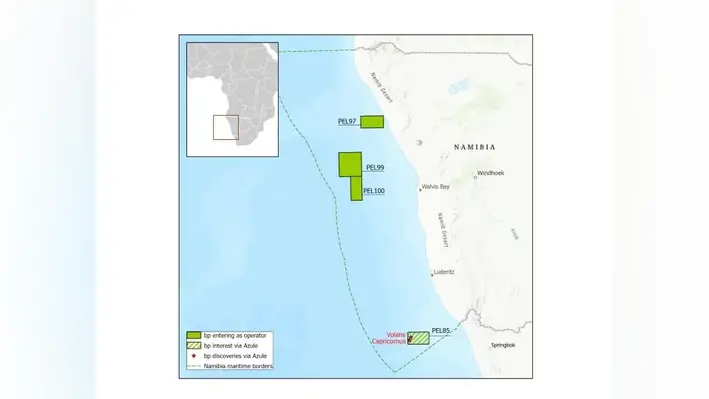
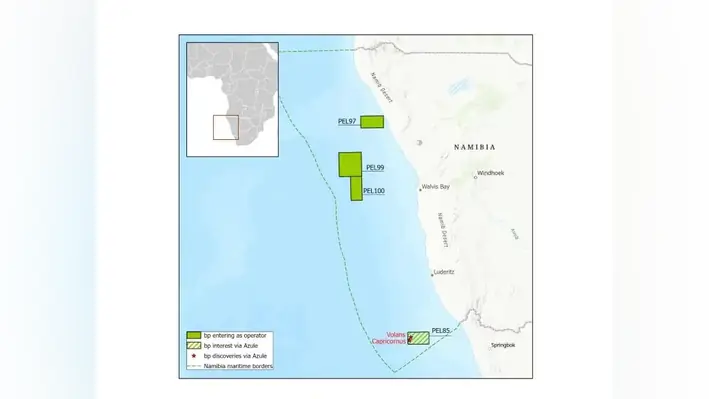 Namibia draws in oil major bp's interests in three offshore exploration blocks as it seeks the acquisition of 60% stakes from Eco Atlantic Oil & Gas.
The move aligns with the major's upstream portfolio expansion strategy, and follows the exploration success of its Azule Energy venture in the region.
Once the formal approvals from the Namibian government are in, bp will assume operatorship of three blocks – PEL97, PEL99 and PEL100 – in the Walvis Basin while Eco Atlantic continues as a partner, alongside Namibia’s national oil company NAMCOR, following transaction closing conditions being met.
Gordon Birrell, bp’s executive vice president, production and operations, said, “Namibia is a region attracting growing industry interest and has a number of exciting frontier basins. This agreement marks bp’s entry into the country as an operator, strengthens bp’s exploration portfolio and provides long-term growth potential. We look forward to supporting the country in developing its resources.”
bp announced two exploration discoveries since the beginning of the year, following 12 discoveries in 2025, further strengthening its exploration portfolio in support of long-term organic growth. Since the beginning of 2025, Azule Energy – a 50:50 joint venture between bp and Eni – has announced four hydrocarbon discoveries: the Algaita-01 well and Gajajeira-01 gas find in Angola and the Volans-1X and Capricornus-1X discoveries in Namibia’s Orange Basin.
Other majors such as TotalEnergies and Galp are already deeply invested in significant projects in the Namibian deep waters. They pledged long-term commitment to the country during a recent meeting with the President Netumbo Nandi-Ndaitwah.
With TotalEnergies acquiring operatorship of Petroleum Exploration License (PEL) 83 while Galp stepping into PEL 56 and PEL 91, the partners have expressed high hopes from Namibia's production generation capacity. This confidence builds on past results from the licenses, namely the Mopane and Venus discoveries, which brought the Orange Basin international-scale success.