As the upstream oil and gas industry evolves, managing end-of-life projects has become a defining challenge for operators and investors alike.
Across the Asia-Pacific, the complexities of transaction structuring, potential disputes, and the allocation of future liabilities are prompting critical discussions. The spotlight is now firmly on decommissioning risk, requiring careful navigation by companies dealing with mature upstream assets. Bringing significant expertise to this conversation, Valeura Energy will take a prominent role in an upcoming Asia-Pacific industry discussion focused entirely on these pressing issues.
Kelvin Tang, Valeura Energy's Executive Vice President, Corporate and General Counsel, is scheduled to speak at an Asia Chapter event in Singapore on 30 September 2026. The session aims to provide a comprehensive examination of how decommissioning obligations are treated across diverse Asia-Pacific markets. Furthermore, it will explore how those lingering obligations can affect mergers, acquisitions, and the broader landscape of future corporate liabilities.
For companies engaged in buying, selling, and operating mature upstream assets, the topic of decommissioning is of direct relevance. The reality of the oil and gas sector is that decommissioning costs and environmental responsibilities can remain securely tied to an asset long after production decisions have been made. Consequently, liability allocation has transformed into a fundamental component of strategic transaction planning.
When operators acquire or divest mature fields, failing to thoroughly account for end-of-life asset retirement can lead to profound operational and financial consequences. The upcoming event will systematically address these precise challenges, providing clarity on the legal frameworks governing the Asia-Pacific region.
Key themes defining the upcoming discussion include:
For Valeura Energy, participating in this discussion is closely aligned with Tang's extensive professional background. Boasting more than 18 years of experience within the international oil and gas sector, his career encompasses a broad spectrum of critical disciplines. Tang's expertise is not strictly limited to legal affairs; it actively covers daily operations, business development, and executive management.
Before joining Valeura Energy, Tang was Head of Business Development at Hibiscus Petroleum. Prior to that, his leadership credentials were fundamentally shaped at KrisEnergy, where he served as Chief Executive Officer. His ascent to the CEO role followed successful tenures as Chief Operating Officer and General Counsel. Notably, KrisEnergy was the direct predecessor to Valeura Energy's initial corporate interests in Thailand.
This rich career trajectory gives Tang direct exposure to the myriad of intricate issues covered by the Singapore event. His practical understanding of acquisition structures, operating responsibilities, and the specific legal treatment of long-term liabilities makes him a highly authoritative voice on decommissioning risk.
The emphasis on meticulous transaction planning and long-term asset stewardship perfectly mirrors the broader operational philosophy of Valeura Energy Inc (TSX:VLE). Operating strictly as an upstream oil and gas company, Valeura maintains a clear, forward-looking strategy designed to add consistent value for its shareholders over the coming years.
Central to the company’s current market position is its robust financial foundation. Valeura has a remarkably strong balance sheet, effectively positioning the organisation for potential inorganic growth opportunities in both the near and medium-term. Beyond its immediate merger and acquisition prospects, the business boasts substantial longer-term upside potential. This optimistic outlook is heavily driven by an operated deep, tight gas play that serves as a cornerstone of their portfolio. As the Asia-Pacific energy sector continues to grapple with the complex realities of mature fields and legacy infrastructure, Valeura's proactive approach to discussing decommissioning risk highlights its readiness to safely navigate the modern upstream landscape.

Malaysia is about to become a hive of activity in the decommissioning and abandonment space in the south-east Asia context.
The country’s decommissioning activity looks set to gather pace significantly during the 2027 to 2030 period as state oil company Petronas lets more contracts to industry in order to retire ageing infrastructure.
The Petronas Activity Outlook 2026-2028 outlines the expected growth in activity across strands of the group’s business, including decommissioning and abandonment.
According to the document, only a handful of contracts have been let so far, mainly for work in Sarawak, covering subsea and platform engineering, as well one in the Malaysian peninsula.
That is expected to climb substantially from next year.Petronas expects a total of 42 contracts in the three-year period from 2027, predominantly covering Sarawak, but also including some work in Sabah and the peninsula.
The number of contracts already let is listed at just four during 2025 and two so far in 2026.
Activity listed as ’not yet contracted’ in the outlook document for 2027 to 2030 is predominantly for work covering wellhead platforms and drilling platforms — representing 35 contracts in total.
The rest of the work covers decommissioning and abandonment for mobile offshore application barges and central processing platforms, as well as floating production, storage and offloading vessels and mobile offshore production units.

Sarawak-based oil and gas services firm United Asiapac Energy Bhd is looking to further expand its well intervention services business in East Malaysia following its debut on the ACE Market of Bursa Malaysia, reported Bernama.
The company’s shares opened flat at 35 sen, with 2.78 million shares changing hands during the early trading session. By 5pm, the stock had closed 11.4% lower at 31 sen, with 40.8 million shares traded.
Speaking after the company’s listing ceremony, executive director and chief corporate officer Ng Her Yinn said the initial public offering (IPO) would provide an opportunity to broaden United Asiapac Energy’s reach beyond its existing markets and strengthen its presence across Malaysia.
“Our plan is to continue growing our presence in Sabah and Sarawak. At the same time, our presence and the work that we deliver are not limited there.
“We already have a presence across Malaysia and this (IPO) will allow us to further expand our business, while also contributing to the development of Sabah and Sarawak,” she said.
The listing ceremony was attended by United Asiapac Energy managing director Ahmad Fadzuli Ali, Deputy Economy Minister Datuk Mohd Shahar Abdullah and TERAJU chief executive officer Junady Nawawi.
Ng said the company has a competitive advantage in providing its services despite the prevailing geopolitical situation.
The company specialises in well intervention services and has an established presence across Malaysia. Its IPO is expected to support further business expansion as it seeks to strengthen its operations and contribute to the development of Sabah and Sarawak, according to Bernama.

L&T Energy Hydrocarbon Offshore (LTEH Offshore) has won a major offshore contract from the Oil & Natural Gas Corporation (ONGC) for the Additional Development of Ratna–I (ADR I) and NLM-14 project on India’s west coast.
Under the project, LTEH Offshore will undertake engineering, procurement, construction, installation and commissioning (EPCIC) activities covering three new well-head platforms and one riser platform. The scope also includes several sections of subsea pipelines and cables, along with brownfield modifications to existing offshore facilities.
The development is intended to increase production and contribute to the continued expansion of ONGC’s offshore assets in the region.
LTEH Offshore delivers integrated EPCIC services to the offshore oil and gas sector, backed by in-house engineering expertise, advanced fabrication facilities and a dedicated marine vessel fleet. Its capabilities span both shallow-water and deep-water developments across international markets.
With more than four decades of offshore project experience, the company has delivered projects covering fixed platforms, subsea pipelines and structures, brownfield modifications and decommissioning.
Commenting on the order win, Parthasarathi Chatterjee, Senior Vice President & Head – L&T Energy Hydrocarbon Offshore, said: “The ADR-I and NLM-14 developments are significant additions to India's offshore energy infrastructure and demonstrate the continued investment in enhancing production from established offshore assets. These projects combine new offshore facilities with brownfield modifications in existing operating fields, calling for careful planning, engineering integration and precise execution. Drawing on our extensive offshore EPCIC experience, we look forward to delivering these developments safely and efficiently, while supporting ONGC’s long-term production objectives.”

 Global energy technology company SLB has secured a contract from Brunei Shell Petroleum (BSP) to help restore production from shut-in wells across several offshore fields.
Under the agreement, SLB will provide a range of integrated services covering subsurface assessment, well candidate identification, engineering and offshore operations. The scope also includes project management, well intervention, production monitoring, metering and marine logistics, all coordinated through a unified execution model aimed at improving production efficiency.
“Building on our long collaboration in the region, this contract reflects a shared commitment to maximizing value from existing offshore resources,” said Gokhan Yarim, senior vice president of Integration, SLB. “Together with BSP, we are combining SLB’s production expertise and integrated execution capabilities to help restore production from shut-in wells, increase recovery from existing infrastructure and support BSP’s long-term production objectives.”
The project represents the first implementation of SLB’s integrated production restoration solution for BSP. It brings together a range of technical disciplines, services and operational workflows to enhance recovery from mature offshore assets. The programme also follows the principles of Well, Reservoir and Facility Management through coordinated surveillance, engineering and intervention planning, providing a structured framework for improving production while supporting safe and efficient operations.
With operators placing greater emphasis on extracting additional value from existing infrastructure, mature offshore fields continue to offer significant production potential alongside increasingly complex operational challenges. The contract demonstrates the growing focus on integrated approaches that combine engineering expertise, coordinated field execution and production management to improve asset performance and maximise recovery.
Key Points:
SLB has secured a contract from Brunei Shell Petroleum to restore production from shut-in wells across multiple offshore fields.
The project is the first deployment of SLB’s integrated production restoration solution for BSP, combining multiple disciplines, services and operational workflows.
The programme covers well candidate selection, project management, engineering, intervention services, monitoring, metering and marine logistics through a coordinated execution model.
The contract highlights the industry's increasing focus on integrated production and recovery strategies to enhance the performance of mature offshore assets safely and efficiently.

 Upstream production and development company, Jadestone Energy, has brought online the first well at ~3,000 bopd as part of its 2026 Malaysia infill drilling campaign on the PM323 PSC.
Currently, the company is focussing on drilling the third contingent well which was confirmed for operations after the first two wells originally planned for the campaign. Identified in the 2023 infill programme, this well targeted the southwest extension of the East Belumut field.
The first of the two firm wells reported strong performance while the second was drilled on the basis of encouraging subsurface results. The Group's 2026 capital expenditure guidance[1] of US$50-80 million remains unchanged.
The company achieved 20% cost savings for operations in the first well, even though it was the longest well drilled on the East Belumut field. It involved tackling complex operations, targeting a 1,200 metre horizontal reservoir section in the well at a total measured depth of 4,866 metres.
T Mitch Little, Chief Executive Officer of Jadestone, said, "Our established operating capabilities in Malaysia, combined with our refreshed focus on operational excellence, have been further validated by the outcome of the EBA-18ST3 well. The result is an excellent start to this year's drilling campaign and will significantly increase our Malaysia production in the near-term against the backdrop of strengthened Brent oil prices, with our most recent Malaysia oil sales attracting a US$14/bbl premium to Brent.
"Following on from the significant progress on our Vietnam project earlier this year and the successful debt refinancing, this is further evidence of a business that is executing on its plan and strategy. We look forward to updating the market further on the second well in the campaign in the near-future."
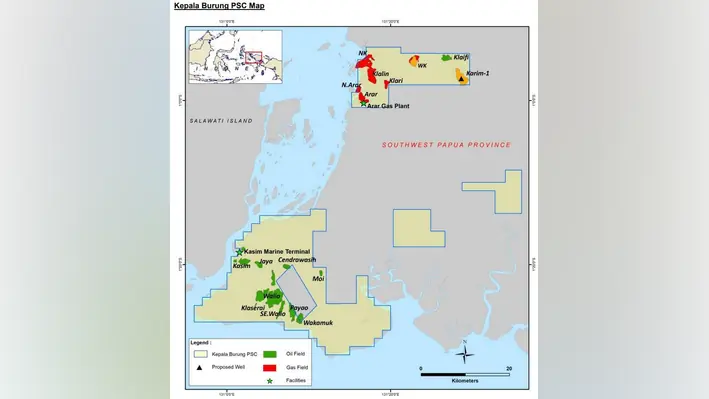
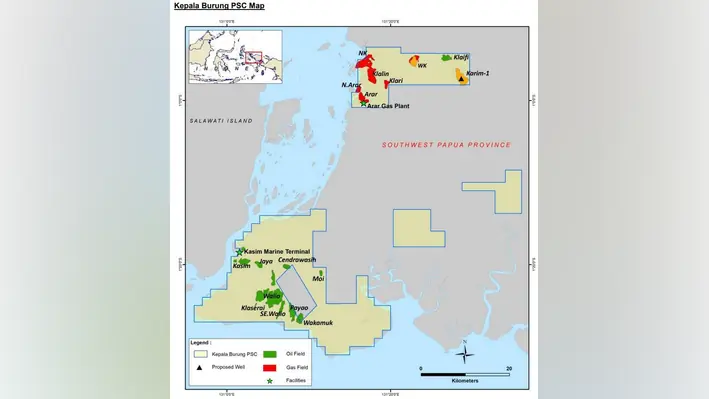 RH Petrogas has commenced drilling operations at the Northwest Klagagi-1 (NWK-1) well under the Kepala Burung Production Sharing Contract (PSC) in Southwest Papua, Indonesia, marking another step in its ongoing gas development and exploration programme.
The well was spudded on 25 June 2026 by Petrogas (Basin) Ltd., the company's 82.65%-owned subsidiary. Located in the Arar block, around 15 km northeast of the Arar production cluster, NWK-1 is planned to reach a total depth of approximately 6,700 ft (2,000 m).
Drilling activities are being carried out using RH Petrogas' own rig, with the operation expected to take approximately 36 days to complete.
NWK-1 has been planned as a combined development and exploration well. Its primary objective is to support the development of gas resources within the upper Kais Formation. Once the development phase is completed, drilling will continue into deeper formations to assess additional hydrocarbon potential in the lower Kais Formation, the Oligocene-aged Sirga Formation and the underlying Devonian-aged Basement.
The drilling campaign forms part of the firm's work commitment under the Kepala Burung PSC and is intended to advance both near-term production opportunities and longer-term resource evaluation within the contract area.
Mr. Francis Chang, Group CEO and Executive Director, commented, "NWK-1 aims to advance the development of existing gas resources while evaluating additional growth opportunities within the contract area. Although drilling of the well has commenced later than initially planned, the delay created an opportunity to deploy the rig for well intervention activities in the nearby Arar block. Workovers were carried out on three wells, all of which were successful and delivered incremental production gains."
The successful workover programme in the nearby Arar block provided additional production before the drilling rig was mobilised for the NWK-1 campaign, supporting the company's strategy of optimising existing assets while pursuing further exploration potential within the PSC.

Conrad Asia Energy has secured a rig in support of its work in the development of the Mako gas field, offshore Indonesia— a market it believes holds immense long-term growth potential.
This could translate into a wealth of opportunities for offshore service providers, well intervention companies and other specialists, as the market evolves.
The Asia-focused gas exploration and development company reported that its subsidiary, West Natuna Exploration Limited (WNEL), signed a binding contract with PT Pertamina Drilling Services Indonesia for the provision of the Admarine 502 jack-up rig.
WNEL is the operator of the Duyung PSC in the Natuna Sea, offshore Indonesia.
The scope of work includes the drilling of six development wells and the installation of the Conductor Support Frame (CSF) on the offshore site and is set to commence in Q2 2027.
Conrad Managing Director and CEO, Miltos Xynogalas, said it represents “a critical milestone” for the Duyung PSC joint venture team as the project advances toward Mako drilling.
The Mako project is structured as initially comprising six development wells tied back to a leased Mobile Offshore Production Unit (MOPU).Sales gas will be transported via a 59 km 18-inch pipeline to the KF platform in the adjoining Kakap PSC, then through the WNTS pipeline for delivery to the domestic market.
Details have also been released regarding the formal contract signing for a Subsea Umbilical, Flowline, and Riser EPCI contract with PT. Timas Suplindo.
Total capex to first gas is estimated at US$320mn (100%), according to Conrad Asia Energy, while future operating costs are targeted at US$70-80mn (100%) per annum, including pipeline transportation costs.
Xynogalas also said in a 16 June 2026 AGM update that Indonesia looks set to be a strong market for the energy industry for the foreseeable future.
The fourth most populous country on earth, forecasts suggest that Indonesia's gas demand will increase by more than 60% over the next decade — from approximately 1,600 to 2,600 million standard cubic feet per day.
“The country is diverting LNG exports back to the domestic market because it needs the gas at home,” he said.
“The government has placed domestic gas prioritisation at the centre of its energy policy. Conrad's gas is exactly what Indonesia needs for its energy security.”
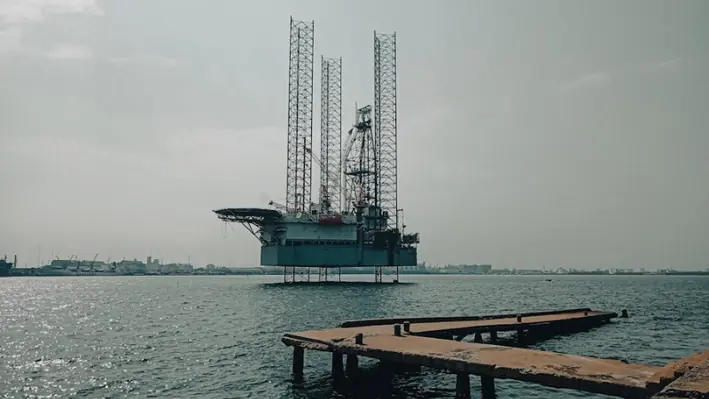
Malaysia is entering a significant phase of offshore decommissioning as numerous ageing oil and gas platforms in the South China Sea reach the end of their operational lives.
PETRONAS is leading the effort to safely retire these installations through a combination of full removals, well plug and abandonment (P&A) operations, and selective repurposing.
As of May 2026, PETRONAS Carigali is progressing a major tender for the removal of up to 31 offshore platforms.
The tender, which covers structures ranging from approximately 100 tonnes to 15,000 tonnes, is expected to be awarded in packages across Sarawak, Sabah, and Peninsular Malaysia.
Industry contractors have shown strong interest in the work, which forms part of a broader programme to address ageing infrastructure.
Well abandonment activities are also advancing.
In early 2026, T7 Global Berhad, through its subsidiary Tanjung Offshore Services, completed well abandonment operations at the Zuhal East field.
Separately, HELMS Geomarine carried out geotechnical drilling campaigns in Sarawak waters between late January and late March 2026 to support jack-up rig operations for future P&A work.
PETRONAS has a track record in rigs-to-reefs (R2R) projects.
Since 2004, five offshore platforms have been successfully converted into artificial reefs, including Baram-8 in Sarawak and structures offshore Terengganu.
These projects aim to support marine biodiversity while meeting environmental requirements.
However, current plans emphasise a case-by-case approach, with options for complete removal, partial decommissioning, or repurposing depending on technical, safety, and regulatory factors.
In its Activity Outlook 2026-2028, PETRONAS highlighted expanded well decommissioning and intervention programmes.
The company has established a Hydraulic Workover Unit (HWU) Academy to develop local expertise and position Malaysia as a regional centre for decommissioning services.
Discussions at OTC Asia 2026 in Kuala Lumpur focused on technology adoption, cost optimisation, and environmental compliance in offshore decommissioning.
Approximately 35 platforms in Malaysian waters are more than 40 years old, and industry estimates suggest substantial decommissioning expenditure over the coming decade.
All activities fall under the oversight of PETRONAS Malaysia Petroleum Management, which requires detailed decommissioning plans covering safety, structural integrity, and seabed restoration where full removal is selected.
The current wave of activity reflects maturing fields and the need to manage end-of-life assets responsibly.
While large-scale platform removals remain in the tender and planning stages, the pace of preparatory work and early contracts indicates that execution will increase in the coming years.
Malaysia's offshore decommissioning programme is expected to serve as a reference for other countries in Southeast Asia facing similar challenges with ageing infrastructure.
PETRONAS continues to stress the importance of balancing cost efficiency with environmental responsibility in all offshore abandonment projects.

Offshore group DOF has announced what it called a “substantial” contract award — valued at between US$25mn and US$50mn — for subsea commissioning support services in the Asia-Pacific (Apac) region.
The deal bolsters the group’s order book across the Apac region, according to Mons Aase, Chief Executive of DOF Group ASA.
Under the new contract, the company will deploy its Skandi Inventor vessel for the execution of the offshore operations, which are scheduled to commence in Q2 2027 in North Australian waters.
The Skandi Inventor is designed for subsea construction and remotely-operated vessel services in up to 3,000 metre water depths.
The scope of work includes DOF's in-house project management and engineering, procurement and logistics support services, with the offshore campaign estimated to blast between 120 and 180 days.
The announcement did not identify the client or the specific project that it will work on, but it reflects ongoing demand for offshore services across the Apac region in everything from subsea commissioning through to oil well interventions and decommissioning and abadnonment.
“The award recognises the capabilities of Skandi Inventor and DOF as a trusted partner in the APAC region,” said Aase.
“The award also secures strong backlog for the Apac region, and we look forward to continuing to deliver safe, efficient and world class subsea and marine services.”
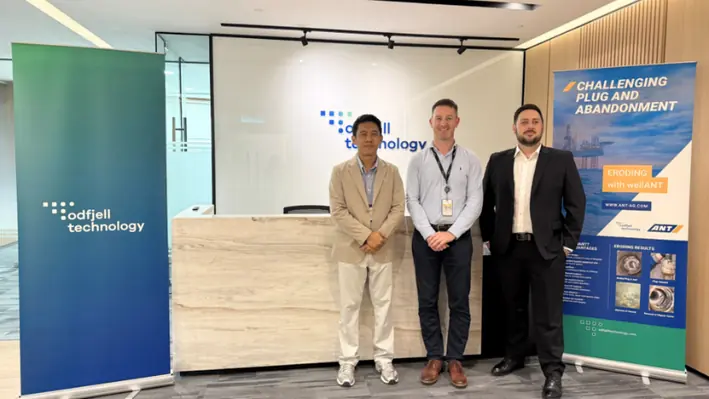
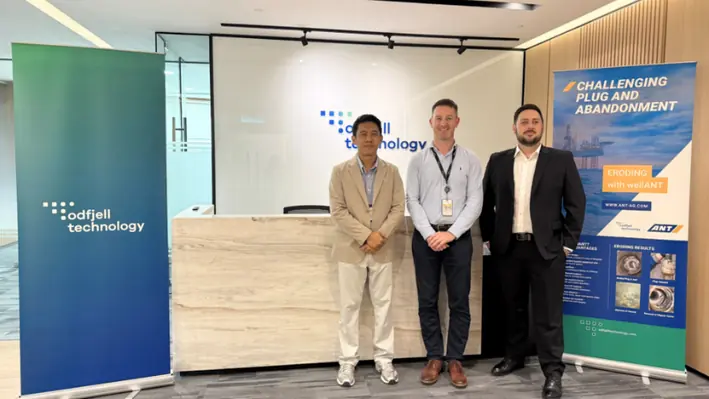 Odfjell Technology has signed a Memorandum of Understanding (MoU) with Applied New Technologies (ANT) to deliver a next generation erosion tool for P&A projects across Southeast Asia.
In the agreement, Odfjell will offer deployment of ANT’s advanced wellANT nozzle head technology in conjunction with its rigless unit and fishing milling techniques.
WellANT preserves well integrity by enabling the safe and precise removal of internal wellbore obstructions without mechanical force, heat or conventional large cuttings.
Paul Toner, Vice President for the Middle East & Asia Pacific at Odfjell Technology, said, “Incorporating wellANT into our services further increases the significant cost and time efficiencies that we can deliver over conventional methods to meet the evolving demands of P&A and intervention.
“The non-intrusive ay ANT’s technology erodes obstructive material not only keeps well integrity but restores full wellbore access. Used with our specialist fishing milling services and rigless unit, which minimises the need for a fulling drilling rig on site, it also further enhances the safety and environmental benefits for P&A operations.”
Odfjell’s focus with wellANT is to support the large volume of P&A wells in the region.

Business is thriving for Weatherford across its south-east Asia business, despite a challenging market elsewhere.
Announcing its Q1 2026 results on 21 April, the company reported various contracts from the region, including new work in Vietnam and Thailand.
Phu Quoc POC awarded Weatherford a five-year contract to provide Tubular Running Services (TRS) for offshore operations in Vietnam.
In Thailand, PTTEP awarded the company an 18-month contract extension to provide drilling services on Rig 15.
The Q1 results statement also reported on existing well construction and completions work in Indonesia.
Here, Weatherford deployed its Vero One-Touch system for an undisclosed major operator to improve how well pipes are handled and installed.
“The system reduced the need for manual intervention, lowering safety risks, while making rig-floor operations more efficient,” the company said in the statement.
“The integrated spin-in automation delivered faster, more consistent make-up with precise torque control, increasing running efficiency compared to conventional methods.”
Weatherford also updated investors on numerous other recent contract wins and projects globally.
Girish Saligram, President and Chief Executive Officer, said the company had delivered “excellent operating results in the midst of a very complex and challenged environment,” citing disruptions in the Middle East.
Copyright © 2026 Offshore Network