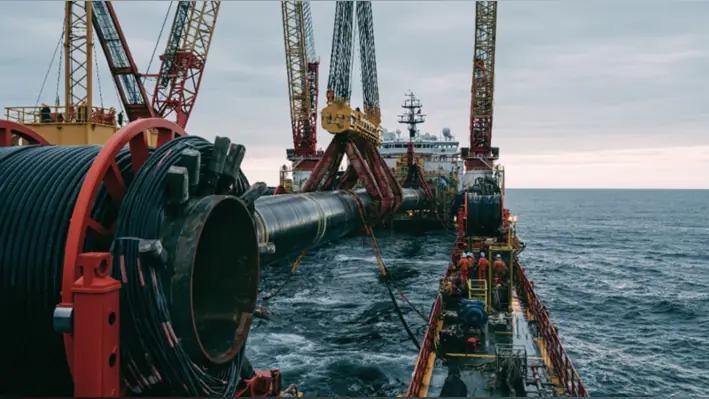
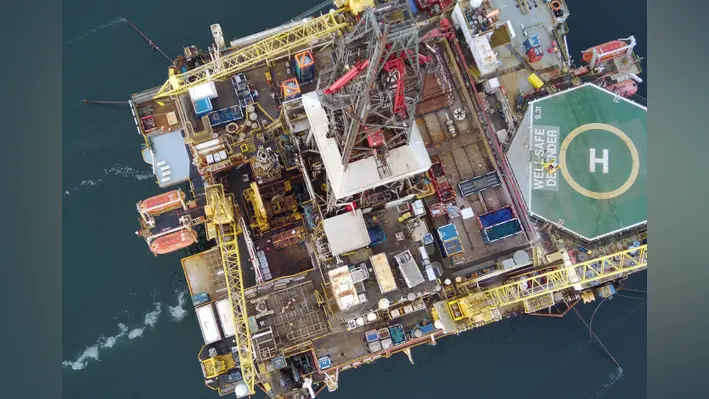
Well-Safe Solutions, a tier-one specialist in well decommissioning, has secured a multi-year agreement with Apache North Sea Limited to decommission platform and subsea wells in the Forties Field.
The programme is scheduled to commence in 2026, with Well-Safe Solutions taking responsibility for all well-related project management, well and subsurface engineering, and offshore execution for both platform and subsea wells.
The contract is expected to sustain hundreds of jobs in Aberdeen while providing a welcome economic uplift to northeast Scotland during a period of ongoing pressure on the sector and concerns around long-term workforce retention.
Phil Milton, Chief Executive Officer at Well-Safe Solutions, said:
“This award is a defining moment for Well-Safe Solutions and a testament to the confidence Apache has in our team to deliver safe, efficient and technically robust decommissioning solutions at scale.
“This contract award is exciting news for our business and for the wider economy, sending a powerful signal to the supply chain and helping to secure critical talent and resources. Today’s announcement is undoubtably a huge moment for our business and our industry, however, it comes at a particularly difficult time for our sector when we are hopeful of retaining the talent and capability that we have in the North Sea”
Industry capacity for mobile offshore drilling units able to carry out both drilling and decommissioning work on platform and subsea wells has fallen steadily in recent years. Only five semi-submersible rigs now remain in the UK Continental Shelf. This continued decline in available assets could hinder the UK’s ability to satisfy future energy requirements and fulfil decommissioning commitments, with thousands of wells expected to require decommissioning before the decade ends.
Donald Martin, Vice President, Decommissioning, Apache, commented:
“We are pleased to partner with Well-Safe Solutions on this large-scale decommissioning programme across the Forties Field. This contract reflects our commitment to delivering safe, predictable and cost-effective decommissioning through disciplined execution and with a high-performing, integrated team.
“Building on decades of successful production from one of the North Sea’s cornerstone assets, Apache is focused on maximising late-life asset value, reducing risk, and delivering a safe, efficient and disciplined transition into decommissioning.”
The latest award further strengthens Well-Safe Solutions’ standing as a strategic leader in the UK decommissioning market. It follows successful recent campaigns involving the Well-Safe Defender and Well-Safe Protector, as well as two other significant North Sea contract wins announced earlier this summer.

 Halliburton has introduced the Volta all electric control system, a fresh step forward in intelligent completions technology designed to improve how reservoirs are managed and monitored
As part of the SmartWell portfolio, this new system focuses on delivering clearer insights, stronger control, and better overall performance throughout a well’s life.
Built using proven field technologies, the Volta system enables continuous monitoring of both well health and reservoir behaviour. This allows operators to act quickly, make informed decisions, and ultimately improve production outcomes. By reducing downtime and speeding up recovery after interruptions, the system helps avoid losses and supports higher annual output.
The integration of the Clariti digital reservoir management suite adds another layer of intelligence. It highlights opportunities to fine tune performance and ensures operators can respond effectively to changing conditions underground. The result is a more connected and responsive approach to managing wells.
Maxime Coffin, vice president, Halliburton Completion Tools, said, “As the company who introduced SmartWell® intelligent completions to the industry, the Volta all-electric control system represents a breakthrough in intelligent completions technology. With EcoStar safety valves, we are now the first to propose a fully electric completion to the industry. Its all-electric architecture reflects Halliburton’s focus on technology leadership, engineering excellence, and technical expertise in completion design and execution. It provides operators with a greater degree of precision, response speed, and improved efficiency to help maximize value throughout the life of the well.”
The design itself is simple yet effective. A single line mono conductor setup removes the need for hydraulic systems, making installation easier and reducing operational risks. Its modular structure also allows flexibility and quicker preparation before deployment.
By combining advanced hardware with intelligent software, the Volta system turns well completions into a fully digital process. Operators gain real time control and can adjust strategies quickly, ensuring consistent performance even in challenging reservoir conditions. This reflects Halliburton’s wider push towards digital solutions that connect technology, people, and operations to deliver reliable and efficient results.

 Odfjell Technology has announced the signing of a five-and-a-half-year contract with ConocoPhillips Skandinavia AS for integrated services in the North Sea.
The contract period has been agreed until 31 December 2031, and covers the provision of platform drilling operations and maintenance services, tubular running services, well engineering, and well planning in Norway.
The contract also covers options for the provision of downhole equipment and permanent plug and abandonment execution. The agreement forms a strong foundation for the company’s growth in the market.
Kurt Meinert Fjell, EVP Operations at Odfjell Technology, said, “We are pleased to further strengthen our partnership through this contract. The agreement underlines the strong relationship between our teams and provides a strong foundation for continued innovation and value creation.”
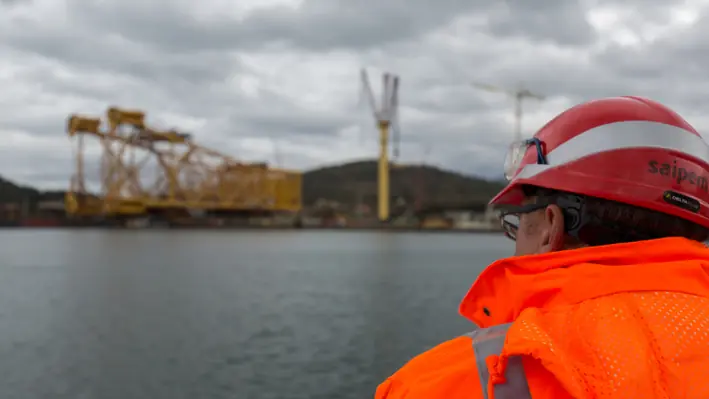
 Saipem has been awarded two offshore contracts in the Kingdom of Saudi Arabia under its long-term agreement with Aramco.
The first contract covers Engineering, Procurement, Construction, and Installation (EPCI) of one water injection tie-in platform, two water injection wells, approximately 5km of pipelines and 15km of 15kV cables at the Safaniya oil field.
The second contract includes the EPCI activities for four water injection wellheads, as well as associated subsea facilities, at the Safaniya oil field.
For the operations, Saipem will employ its construction vessels that are currently deployed in the region. These contracts strengthen Saipem’s presence in the Kingdom and further consolidate its longstanding relationship with Aramco.

Reconnaissance Energy Africa Ltd. has released its operational update and 2025 financial and operational results, alongside the renewal of its shelf prospectus.
Brian Reinsborough, President and CEO, said, "2025 was another transformational year for ReconAfrica as we progressed all aspects of our strategic goals. We completed our farm down transaction with BW Energy Ltd. which was a significant milestone for the Company. We made the strategic move to broaden our portfolio by entering the shallow waters of Gabon by signing the Ngulu PSC, which adds another discovery to our inventory and high potential exploration acreage. We entered Angola by signing the MOU to ensure we captured significant running room in the Damara Fold Belt in advance of drilling the Kavango discovery. And finally, we made a significant play opening discovery at the Kavango West 1X well. I congratulate the ReconAfrica team, and our partners, for making this an exceptional year of advancement for the Company."
Namibia
In Namibia, activities at the Kavango West 1X discovery well are progressing as planned, with optimised zone production testing expected to begin in early to mid-May. A five-inch production liner has been installed in the wellbore, enabling isolation and sequential testing of zones. Perforation and testing will cover six hydrocarbon-bearing intervals ranging from 45–75 metres in thickness across the Elandshoek and Huttenburg formations, assessing around 420 metres of hydrocarbon-saturated section. Testing will proceed from the deepest to the shallowest zone, with each phase potentially lasting up to 10 days, extending the programme to the end of June.
The company is also advancing preparations for a follow-up appraisal well located approximately 3 – 4 km southeast of the KW1X discovery. A successful appraisal well would support reserve booking and help progress toward a final investment decision (FID).
Gabon
The company has received all raw seismic data to begin a 3D reprocessing programme over the Loba oil discovery, along with an additional 400 sq km covering high-priority prospect areas. Final seismic reinterpretation is expected in Q4 2026 and will incorporate advanced Pre-Stack Depth Migration and Full Waveform Inversion technology to better image salt-related exploration plays across the concession. The dataset will support a resource report and appraisal well location selection for the Loba oil field.
Further details on the 2025 highlights and subsequent period are available on the ReconAfrica website
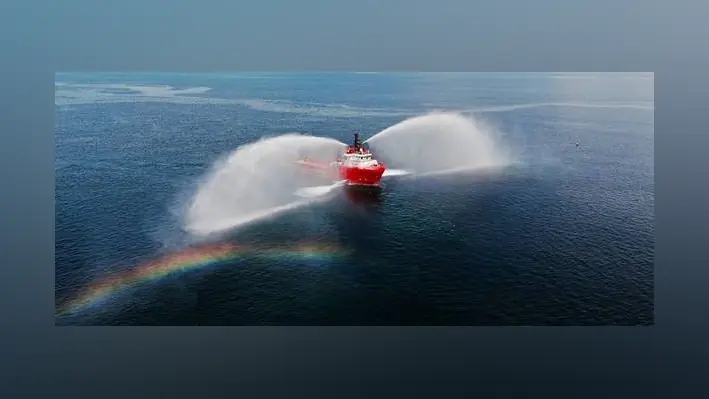
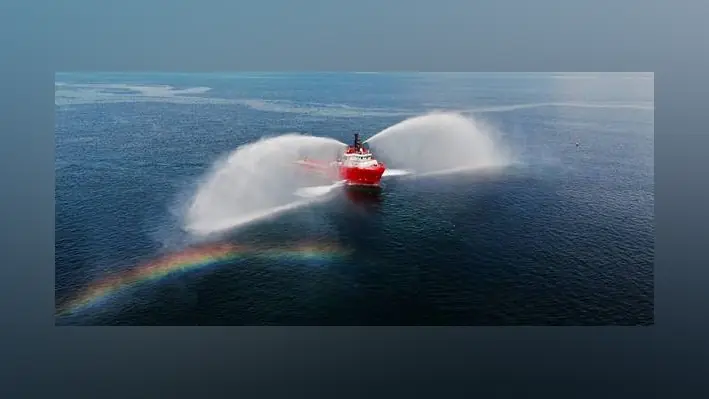 Perdana Petroleum has strengthened its position in offshore services after winning new vessel contracts from Petronas Carigali
The agreement involves the supply of two anchor handling tug and supply vessels to support offshore activities.
The contracts were awarded on April 8 to Perdana Nautika, a fully owned subsidiary of the company. These vessels will play a key role in maintaining smooth offshore operations, offering round the clock support for drilling rigs and installations. Their duties will also include towing and anchor handling, ensuring safe and efficient offshore movement.
The charter periods are set for 303 days and 224 days, with both contracts offering an option for an additional 40 day extension. This provides flexibility depending on operational needs.
Perdana Petroleum noted that the total contract value is not fixed at this stage, as it will depend on future work orders issued throughout the charter period.
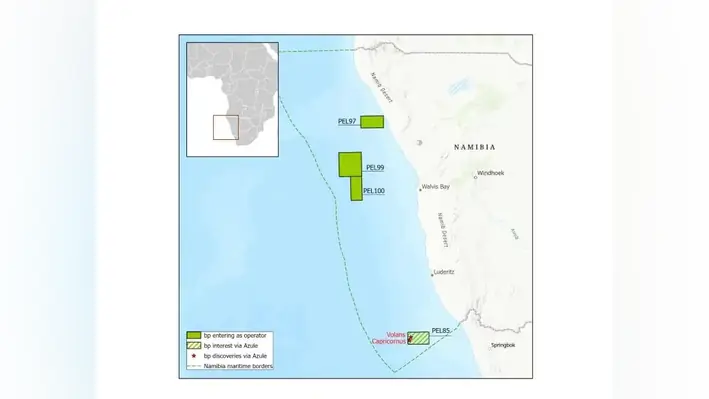
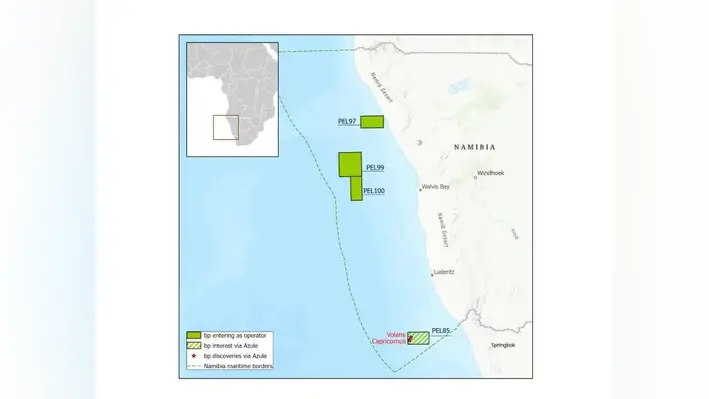 Namibia draws in oil major bp's interests in three offshore exploration blocks as it seeks the acquisition of 60% stakes from Eco Atlantic Oil & Gas.
The move aligns with the major's upstream portfolio expansion strategy, and follows the exploration success of its Azule Energy venture in the region.
Once the formal approvals from the Namibian government are in, bp will assume operatorship of three blocks – PEL97, PEL99 and PEL100 – in the Walvis Basin while Eco Atlantic continues as a partner, alongside Namibia’s national oil company NAMCOR, following transaction closing conditions being met.
Gordon Birrell, bp’s executive vice president, production and operations, said, “Namibia is a region attracting growing industry interest and has a number of exciting frontier basins. This agreement marks bp’s entry into the country as an operator, strengthens bp’s exploration portfolio and provides long-term growth potential. We look forward to supporting the country in developing its resources.”
bp announced two exploration discoveries since the beginning of the year, following 12 discoveries in 2025, further strengthening its exploration portfolio in support of long-term organic growth. Since the beginning of 2025, Azule Energy – a 50:50 joint venture between bp and Eni – has announced four hydrocarbon discoveries: the Algaita-01 well and Gajajeira-01 gas find in Angola and the Volans-1X and Capricornus-1X discoveries in Namibia’s Orange Basin.
Other majors such as TotalEnergies and Galp are already deeply invested in significant projects in the Namibian deep waters. They pledged long-term commitment to the country during a recent meeting with the President Netumbo Nandi-Ndaitwah.
With TotalEnergies acquiring operatorship of Petroleum Exploration License (PEL) 83 while Galp stepping into PEL 56 and PEL 91, the partners have expressed high hopes from Namibia's production generation capacity. This confidence builds on past results from the licenses, namely the Mopane and Venus discoveries, which brought the Orange Basin international-scale success.
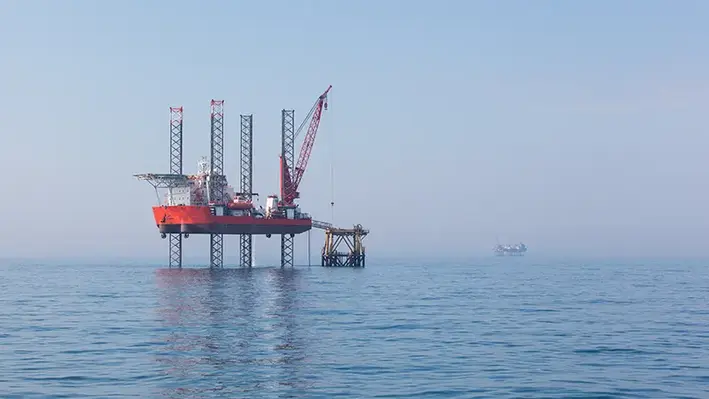
CODA has published a new report analysing the regulatory frameworks governing both offshore and onshore oil and gas decommissioning in Australia
Titled Australia’s Oil and Gas Decommissioning Regulatory Landscape, the report explores the country’s decommissioning framework by assessing international obligations, Commonwealth legislation, and state and territory regulations across Western Australia, South Australia, Victoria, and the Northern Territory. It highlights a system characterised by multiple layers of legislation, some of which overlap, alongside evolving regulatory expectations.
With decommissioning activity on the rise, the report points to increasing strain on regulatory structures that were originally developed to support exploration and production phases. Feedback from industry stakeholders indicates that navigating this complex and multi-layered system can be challenging.
The study is based on detailed regulatory mapping and targeted consultations with stakeholders including government bodies, regulators, titleholders, and supply chain participants. These insights have informed the identification of key themes and practical opportunities to improve coordination, streamline approval processes, and enhance clarity within the regulatory environment.
The findings emphasise the need for more aligned and efficient regulatory pathways to support safe, timely, and effective decommissioning at scale. Suggested improvements include stronger collaboration between agencies, clearer guidance materials, and enhanced support for industry in understanding regulatory requirements.
CODA CEO Francis Norman said the report provides a foundation for ongoing regulatory evolution as decommissioning activity continues to grow.
“Decommissioning at scale is still relatively new in Australia, and all stakeholders are continuing to build capability as the industry evolves. This report brings together industry experience and regulatory insight to highlight where the current system is working well, and where there are opportunities to improve clarity, consistency, and efficiency.”
The report was developed with support from Kent PLC, which led the regulatory mapping component, alongside contributions from a wide range of industry and regulatory stakeholders who participated in the consultation process.
Read more about the report here
 SLB has completed its acquisition of HydraWell Intervention AS, a Norway based company known for its advanced solutions in well abandonment and integrity management
This move strengthens SLB’s position in the growing field of well intervention and supports its focus on delivering practical and efficient solutions for the energy sector.
HydraWell brings with it a specialised approach to plug and abandonment, often referred to as P and A. Its core technology, known as perforate, wash and cement, offers a different way of sealing wells. Instead of relying on traditional methods that often involve heavy mechanical work, this process creates strong barriers within the well structure in a more direct and controlled manner. The result is a simpler operation that reduces both time and cost.
“This acquisition represents an important step in SLB’s strategy to deliver transformative solutions for our customers,” said Frederik Majkut, president, Reservoir Performance, SLB. “By integrating HydraWell’s groundbreaking technology with the global expertise and intervention capabilities of SLB, we are uniquely positioned to redefine operational efficiency and cost-effectiveness in well decommissioning and other well integrity remediation challenges.”
The technology developed by HydraWell has already been tested in real field conditions and supported by detailed modelling. It allows for effective cleaning of the well and careful placement of barriers, ensuring long term safety and performance. By removing the need for complex steps such as casing removal, it offers a more straightforward solution for operators managing ageing wells.
This acquisition also gives SLB the ability to offer flexible services across different types of well work. While it is designed for permanent closure, the same approach can also support other tasks such as zonal plugging and general well repair. This makes it useful for companies aiming to maintain efficiency while meeting strict environmental and regulatory standards.
As the demand for responsible well closure continues to rise, SLB is positioning itself to meet these needs with modern and reliable solutions. The addition of HydraWell strengthens its ability to support customers through every stage of a well’s life cycle.

 As digitalisation continues to shape every sector of the offshore industry, decommissioning cannot remain out of its influence. A US$7.2bn market that is projected to see solid growth over the next four years is reflective of the sector's urgency which operators can no longer overlook. The liabilities of decommissioning can be best addressed by choosing the digital path, which will play a significant role in supporting operators by reducing both costs and downtime, even when ensuring safety and keeping project delivery sustainable.
Operators can rely on digitalisation right from the start, whereby they can use an accurate digital model of the targeted platform to determine loopholes that require addressing. This digital model will highlight the extent of damages operators are looking at, from corrosion to storm impact, to name a few, before they formulate the next steps.
Tackling gigantic topsides and jackets can be prone to incorrect cuts when attempted manually. To eliminate such risks, there are digital solutions that generate optimal cutting plan to dismantle structures of several tons into portable numbers. Before beginning the project in person, the virtual run-through will give an idea of user-defined elevations or check the forces that goes behind the sections.
When these huge platforms have to be moved, they have to pass uncertain conditions, including vessel stability, crane capacity and harsh environments. These challenges can be minimised by deploying an integrated software approach which combines structural analysis with hyrodynamic and hydrostatic analysis.
Analysis softwares can also support operators to plan sustainable outcomes of decommissioning, such as the rigs-to-reef programmes. These tools can help gauge whether the structure's final deployment is proper and safe for a lasting period.

CB&I has completed the acquisition of Petrofac’s Asset Solutions business, which is actively engaged on various decommissioning and abandonment (D&A) assignments in the Gulf of America.
A leading provider of operations, maintenance, wells and decommissioning services for onshore and offshore energy assets, with projects across the globe, the Asset Solutions’ portfolio includes work to decommission the South Pass 60, South Pass 6 and East Breaks 165 fields.
Announcing the closure of the transaction on 9 April, 2026, Mark Butts, CB&I President and CEO, said it marked “an exciting new era for our company” as it welcomed approximately 3,000 Asset Solutions colleagues to the newly-expanded group.
“This acquisition strengthens CB&I’s portfolio with a complementary reimbursable contracting business, delivering predictable cash flow and enhancing service capabilities,” he said.
“It also supports CB&I’s diversification into integrated services, expands customer relationships, and opens pathways for growth in international markets.”
The acquisition also provides Asset Solutions with access to CB&I’s debt‑free balance sheet and global liquidity, enabling the business to operate from a position of greater financial strength.
John Pearson, Chief Operating Officer of CB&I Asset Solutions, said this enhanced stability ensures continuity of service delivery for customers and creates a solid platform for expanding capabilities across key markets internationally.
“With the backing of CB&I’s financial strength, global reach and operational capabilities, the business is exceptionally well positioned to accelerate our growth ambitions,” said Pearson.
“Asset Solutions is now able to invest with confidence, expand service offerings, enhance the reliability and efficiency of the assets we support, and deliver even greater value to customers around the world.”
In 2022, Petrofac and Promethean Decommissioning Company (PDC) formed an alliance to decommission the South Pass 60, South Pass 6 and East Breaks 165 fields, offshore Gulf of America.
The legacy offshore fields and assets include nine platforms, 200 wells and 32 pipeline segments.
As the nominated Decommissioning Services Provider, in a contract valued at around US$200mn, the scope of work includes the safe, efficient, and assured decommissioning of the fields.
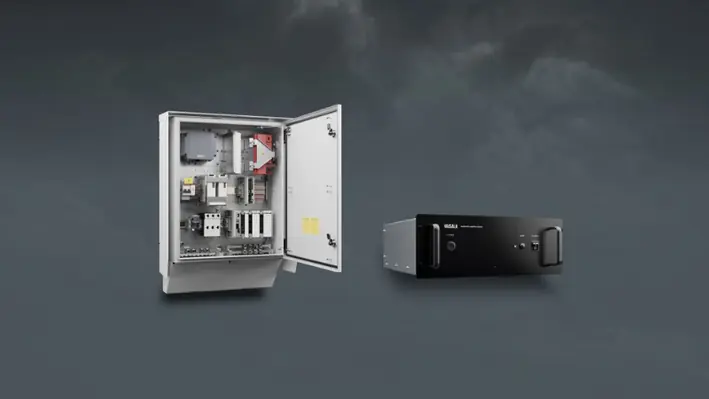
Vaisala has introduced its Maritime Automatic Weather Station AWS830, a next-generation solution designed to strengthen safety and operational reliability in offshore and marine environments.
The system provides continuous, real-time data on key parameters such as wind speed, atmospheric pressure, visibility, temperature, humidity and wave conditions. This level of monitoring is critical for offshore operations, where changing weather can directly impact navigation, lifting activities and helideck operations.
Engineered for harsh marine conditions, the AWS830 is built to withstand corrosion, vibration, extreme temperatures and high humidity. Its rugged design ensures dependable performance in exposed offshore settings, supporting safer decision-making across vessels and platforms.
Security and data integrity are also central to the system. The AWS830 incorporates advanced cybersecurity features to ensure that weather data remains accurate, authenticated and protected. This is particularly important in offshore environments, where reliable information is essential for both safety and operational continuity.
Panu Partanen, vice president of sales and marketing for Weather, Energy and Environment at Vaisala, said the launch represents a significant technological step forward. “AWS830 represents a fundamental next-generation advancement in maritime weather monitoring of which we have decades of experience. This launch reinforces our commitment to supporting maritime operations through reliable, cybersecure weather intelligence,” he noted.
The system’s modular design allows integration with vessel navigation and automation systems, while also supporting a wide range of sensors. It is compatible with Vaisala Elements Helideck Monitoring Software, enhancing safety for offshore helicopter operations.
Mikko Nikkanen, head of maritime at Vaisala, emphasised the importance of reliability in critical environments. “Maritime operations demand weather monitoring systems that perform flawlessly while meeting stringent safety and environmental standards. Our customers need systems they can depend on and trust for critical operational decisions,” he said.
Deliveries of the AWS830 are expected to begin in June 2026, as demand grows for advanced monitoring solutions in offshore energy and maritime sectors.
Page 16 of 137